

Key Takeaways
Makes progress visible and motivating
Seeing a chain of completed days creates a tangible sense of momentum. This visual feedback can strengthen motivation, especially during the early weeks when a habit feels effortful.
Builds self-awareness about daily patterns
Tracking reveals when and why you skip habits, giving you real data to adjust your routine. This kind of honest self-knowledge is difficult to develop through reflection alone.
Helps habits stick through accountability
The act of recording a behavior - even privately - adds a gentle layer of accountability. Studies in behavioral psychology suggest that self-monitoring is one of the most reliable behavior-change strategies.
Low cost and easy to start
A basic habit tracker requires nothing more than a notebook and a pen. Even free apps offer robust tracking features, making this an accessible tool for almost anyone.
Missed days can trigger guilt and shame
For some people, breaking a streak feels discouraging enough to abandon the habit entirely - a phenomenon sometimes called the 'what-the-hell effect' in behavioral research. Tracking can inadvertently make setbacks feel worse than they are.
Can shift focus from feeling to logging
When tracking becomes the point, you may find yourself completing a habit just to tick a box rather than because it genuinely benefits you. The numbers can overshadow the actual experience.
Too many tracked habits creates overwhelm
Trying to monitor five or more habits simultaneously often leads to abandoning the system altogether. The setup cost of a complex tracker can outweigh its benefits.
Apps can add unwanted screen time
Digital habit trackers require opening your phone, which can expose you to notifications and distractions. This is worth considering if reducing screen time is already a goal of yours.
Our Verdict
Habit tracking is a genuinely useful tool for many people, particularly when starting a new routine or trying to understand patterns in daily behavior. The key is keeping it low-stakes and flexible - a tracker should reflect your progress, not judge it. When tracking starts to feel like a chore or a source of guilt, it may be time to simplify or step back entirely.
Habit tracking is best suited to beginners who want structure and visibility as they build new routines, and to anyone who benefits from seeing their progress in a concrete, measurable way.
What Is Habit Tracking, Exactly?
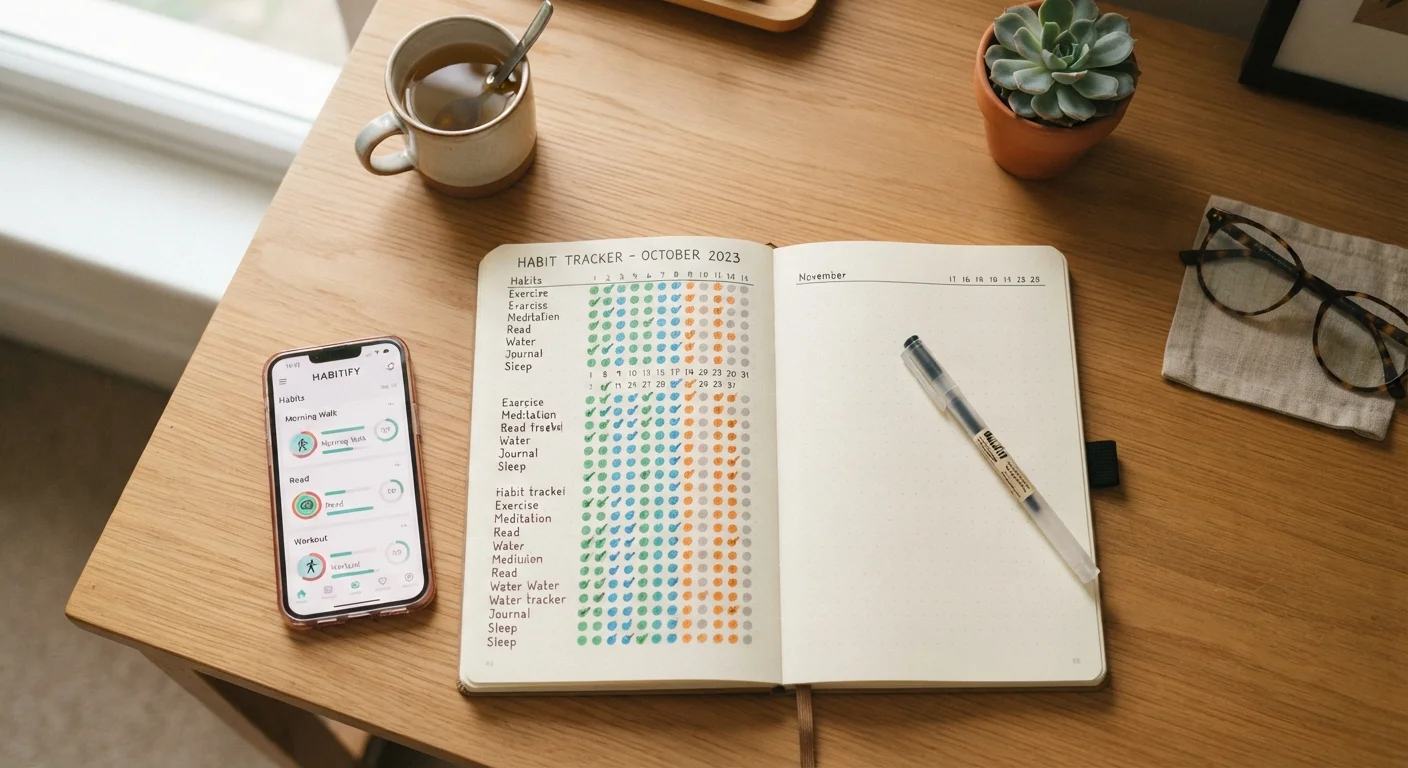
Habit tracking simply means recording whether you completed a chosen behavior on a given day. That might look like ticking a box in a paper journal, marking an X on a wall calendar, or logging a streak inside a smartphone app. The goal is the same regardless of format: to create a visible record of your actions over time.
People track all kinds of habits - drinking enough water, going for a walk, reading before bed, meditating, or taking medication as prescribed. The practice has roots in behavioral psychology, where the act of monitoring itself can reinforce the behavior you want to repeat. If you're just getting started with building routines, see our step-by-step guide to building a daily habit for the foundational concepts behind habit formation.
The Real Advantages of Tracking Your Habits
When used with the right mindset, habit trackers offer several meaningful benefits - particularly for people who are new to self-improvement routines.
Makes progress visible and motivating
Seeing a chain of completed days creates a tangible sense of momentum. This visual feedback can strengthen motivation, especially during the early weeks when a habit feels effortful.
Builds self-awareness about daily patterns
Tracking reveals when and why you skip habits, giving you real data to adjust your routine. This kind of honest self-knowledge is difficult to develop through reflection alone.
Helps habits stick through accountability
The act of recording a behavior - even privately - adds a gentle layer of accountability. Studies in behavioral psychology suggest that self-monitoring is one of the most reliable behavior-change strategies.
Low cost and easy to start
A basic habit tracker requires nothing more than a notebook and a pen. Even free apps offer robust tracking features, making this an accessible tool for almost anyone.
One often-overlooked benefit is how tracking helps you notice patterns you wouldn't otherwise see. You might discover that you consistently skip your evening walk on Tuesdays, or that your sleep quality improves after days when you limit screen time. That kind of insight is hard to gain from memory alone. For a deeper look at how digital behaviors fit into your daily patterns, explore our piece on screen time patterns worth reconsidering.
The Genuine Drawbacks Worth Knowing
Habit tracking isn't a perfect fit for everyone, and being honest about its limitations helps you use it more wisely - or decide it's not the right approach for you at all.
Missed days can trigger guilt and shame
For some people, breaking a streak feels discouraging enough to abandon the habit entirely - a phenomenon sometimes called the 'what-the-hell effect' in behavioral research. Tracking can inadvertently make setbacks feel worse than they are.
Can shift focus from feeling to logging
When tracking becomes the point, you may find yourself completing a habit just to tick a box rather than because it genuinely benefits you. The numbers can overshadow the actual experience.
Too many tracked habits creates overwhelm
Trying to monitor five or more habits simultaneously often leads to abandoning the system altogether. The setup cost of a complex tracker can outweigh its benefits.
Apps can add unwanted screen time
Digital habit trackers require opening your phone, which can expose you to notifications and distractions. This is worth considering if reducing screen time is already a goal of yours.
When Tracking Feels Like Too Much
If monitoring your habits is making you anxious, self-critical, or obsessed with streaks, it may be worth stepping back. Habit tracking is a tool, not a requirement. Many people build strong, lasting routines without any formal tracking system. If the practice is adding stress rather than reducing it, simplifying or pausing is a completely valid choice.
If you're unsure which format to try, our comparison of paper journals, apps, and calendars can help you find the method that fits your lifestyle without adding friction.
How to Track in a Way That Actually Helps
The most effective habit trackers are simple, forgiving, and easy to access. A few practical principles can make the difference between a system that motivates and one that quietly drains you.
- Start with one or two habits only. Tracking a dozen things at once creates overwhelm. Focus on what matters most right now.
- Choose a format you enjoy. If you love stationery, a paper journal will feel rewarding. If you live on your phone, an app makes more sense.
- Drop the streak obsession. Missing a day doesn't erase your progress. Research on habit formation consistently shows that occasional lapses are normal and don't derail long-term behavior change.
- Review weekly, not obsessively. A brief Sunday check-in is more useful than anxiously monitoring daily data.
The Daily Habit Starter Checklist is a practical resource for setting up a new tracking system before the motivation of week one starts to fade. And once your routine is underway, honest indicators that your routine is working can help you evaluate whether your habits are delivering real results.
66 days
Average time for a habit to become automatic
A study published in the European Journal of Social Psychology found that, on average, it took 66 days for a new behavior to feel automatic - not the commonly cited 21 days.
~40%
Of daily behaviors driven by habit
Research published in the journal Personality and Social Psychology Bulletin estimated that roughly 40% of everyday actions are habitual rather than consciously decided.
This article is for informational purposes only and is not a substitute for advice from a qualified health professional. If you have concerns about your mental health or wellbeing, please consult a licensed healthcare provider.