

Key Takeaways
Option A
Silicone Caulk
The waterproof, flexible workhorse for wet and outdoor areas.
Best for: Best for areas with constant moisture exposure, temperature swings, or movement - such as bathtubs, showers, and exterior gaps.
Option B
Latex Caulk
The paintable, easy-cleanup choice for interior trim and dry surfaces.
Best for: Best for interior trim, baseboards, crown molding, and drywall gaps where a painted finish is needed.
If you're sealing a bathtub, shower surround, or sink
Silicone Caulk
Silicone's waterproof, mold-resistant properties hold up under daily water exposure far better than latex, which can absorb moisture and degrade over time.
If you're filling gaps along baseboards, window trim, or crown molding
Latex Caulk
Latex adheres well to drywall and wood, dries quickly, and accepts paint - making it the standard choice for interior finish work.
If you're sealing an exterior gap around windows or door frames
Silicone Caulk
Silicone withstands UV exposure, temperature extremes, and moisture that would cause latex to crack, peel, or lose adhesion outdoors.
If you want the simplest cleanup and plan to paint the finished surface
Latex Caulk
Latex wipes away with a damp cloth before it cures, and most formulas accept paint within an hour - silicone resists paint adhesion entirely.
What Sets These Two Caulks Apart
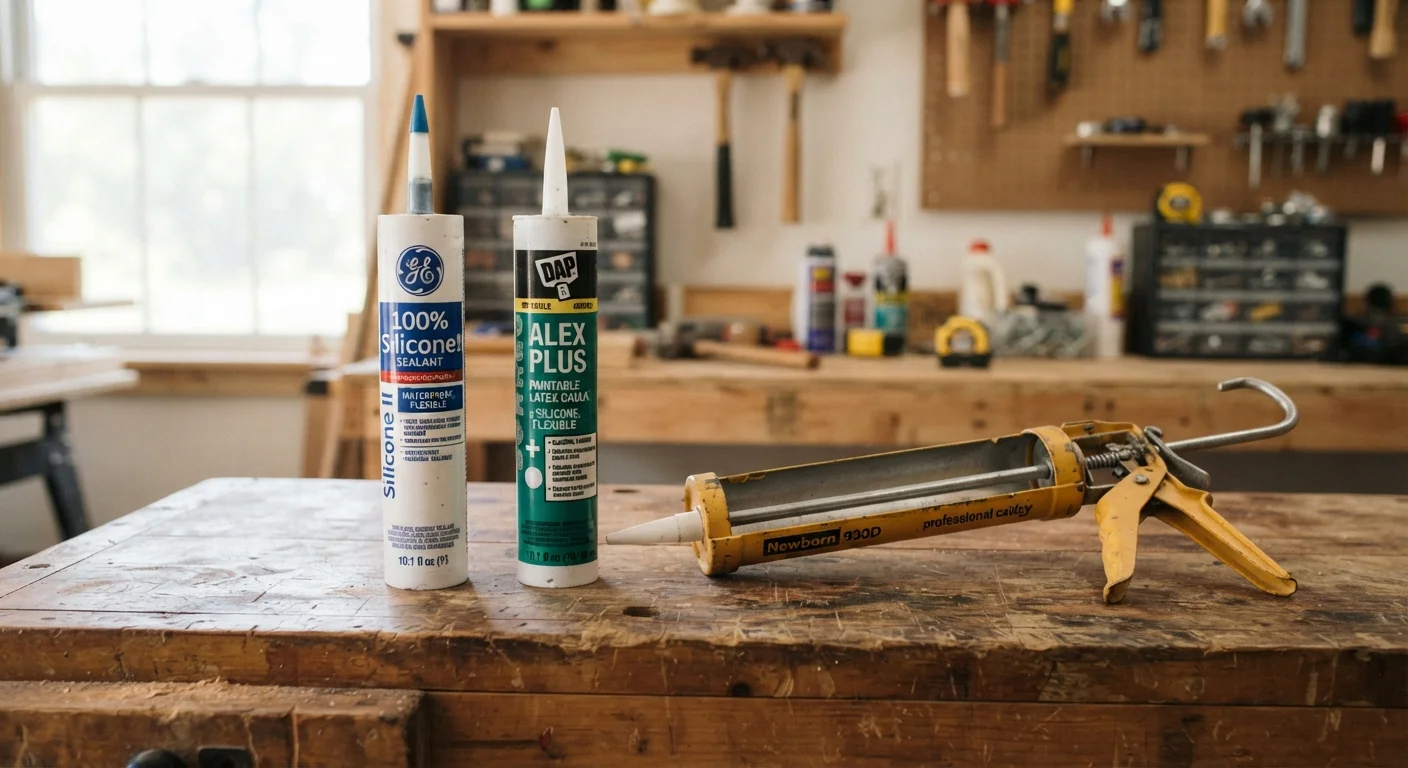
At a glance, silicone and latex caulk look nearly identical in the tube. Both fill gaps, both create seals, and both come in white or clear. The differences emerge once they're applied - and those differences have real consequences for how long a seal holds up.
Silicone caulk is made from a synthetic rubber compound. It remains flexible after curing, meaning it can stretch and compress slightly as surfaces shift with temperature or moisture. It forms a waterproof, non-porous barrier and resists mold and mildew growth in persistently damp conditions. The trade-off: it doesn't accept paint, it requires mineral spirits or a solvent for cleanup, and it can be trickier to smooth neatly.
Latex caulk (also called acrylic latex or painter's caulk) is water-based. It cleans up with water, dries relatively quickly, and can be painted over with standard interior paints. It adheres well to porous surfaces like wood and drywall, making it a natural fit for trim and molding work. However, it absorbs moisture over time, can crack in areas with heavy movement, and will eventually fail in consistently wet environments.
| Criterion | Silicone Caulk | Latex Caulk |
|---|---|---|
| Best environment | Wet, outdoor, high-movement areas | Dry interior surfaces |
| Waterproofing | Excellent - non-porous barrier | Limited - absorbs moisture over time |
| Flexibility after cure | Remains flexible | Can crack under movement |
| Paintable | No - paint won't adhere | Yes - accepts most interior paints |
| Cleanup | Requires solvent (mineral spirits) | Water and a damp cloth |
| Mold resistance | High - especially mold-rated formulas | Lower in persistent moisture |
| Ease of application | Moderate - requires careful smoothing | Easier - more forgiving |
| UV and weather resistance | Strong | Weaker - degrades outdoors |
Where Each Type Belongs in Your Home
The single most helpful rule of thumb: wet areas and outdoors get silicone; dry interior surfaces get latex. Here's how that breaks down room by room.
Bathroom and Kitchen
Anywhere water pools or splashes regularly - the seam between a bathtub and tile wall, around a sink basin, or along the edge of a shower floor - calls for silicone. Water standing against a latex seal, even briefly, will eventually work its way underneath and cause the caulk to lift or allow mold to form behind it.
Exterior Gaps
Window frames, door casings, and siding gaps that face the elements need a caulk that won't break down under UV rays or freeze-thaw cycles. Silicone handles this reliably. Latex applied outdoors tends to become brittle within a few seasons, leading to cracking and water infiltration.
Interior Trim and Finish Work
Baseboards, crown molding, door casings, and the junction between drywall and wood trim are natural territory for latex caulk. These surfaces are dry, low-movement, and will almost always be painted. Latex's paintability is not optional here - it's essential for an invisible, finished look.
If you've recently dealt with a failed seal and want to understand the full picture of what causes caulk to break down, see our guide to why caulk fails and how to reapply it properly.
What About Siliconized Latex (Hybrid) Caulk?
You'll often see products labeled 'siliconized latex' or 'acrylic with silicone.' These hybrids offer slightly better flexibility and moisture resistance than standard latex, while still being paintable and water-cleanup friendly. They can be a reasonable middle ground for areas with occasional - but not constant - moisture, such as around a kitchen backsplash. However, they are not a substitute for pure silicone in showers or tubs, where long-term waterproofing matters most.
Tips for Getting a Clean, Lasting Application
Choosing the right type is half the job. How you apply it determines whether that seal holds for one year or ten.
20+ years
Potential lifespan of properly applied silicone caulk
Silicone caulk applied to a clean, stable surface in a wet environment can last two decades or more before needing replacement, according to general industry guidance.
5-10 years
Typical lifespan of latex caulk on interior trim
Latex caulk in low-movement, dry interior applications generally holds up well for five to ten years before cracking or shrinking becomes visible.
- Clean the surface thoroughly. Both types need a dry, grease-free, and residue-free surface. Any old caulk, soap scum, or dust creates a weak bond. A plastic scraper and rubbing alcohol work well for final prep.
- Cut the tube tip at a slight angle. A 45-degree cut gives you more control over bead size and direction. Start small - you can always apply more, but excess is difficult to remove cleanly, especially with silicone.
- Smooth while wet. Run a dampened fingertip or a caulk tool along the bead immediately after application to press it into the gap and create a concave, finished surface. For silicone, a little dish soap on your finger helps prevent sticking.
- Allow full cure time before exposing to water. Latex may feel dry to the touch within an hour, but most silicone requires 24 hours to fully cure. Check your specific product's instructions, as cure times vary with humidity and temperature.