

Key Takeaways
Tape Measure Markings
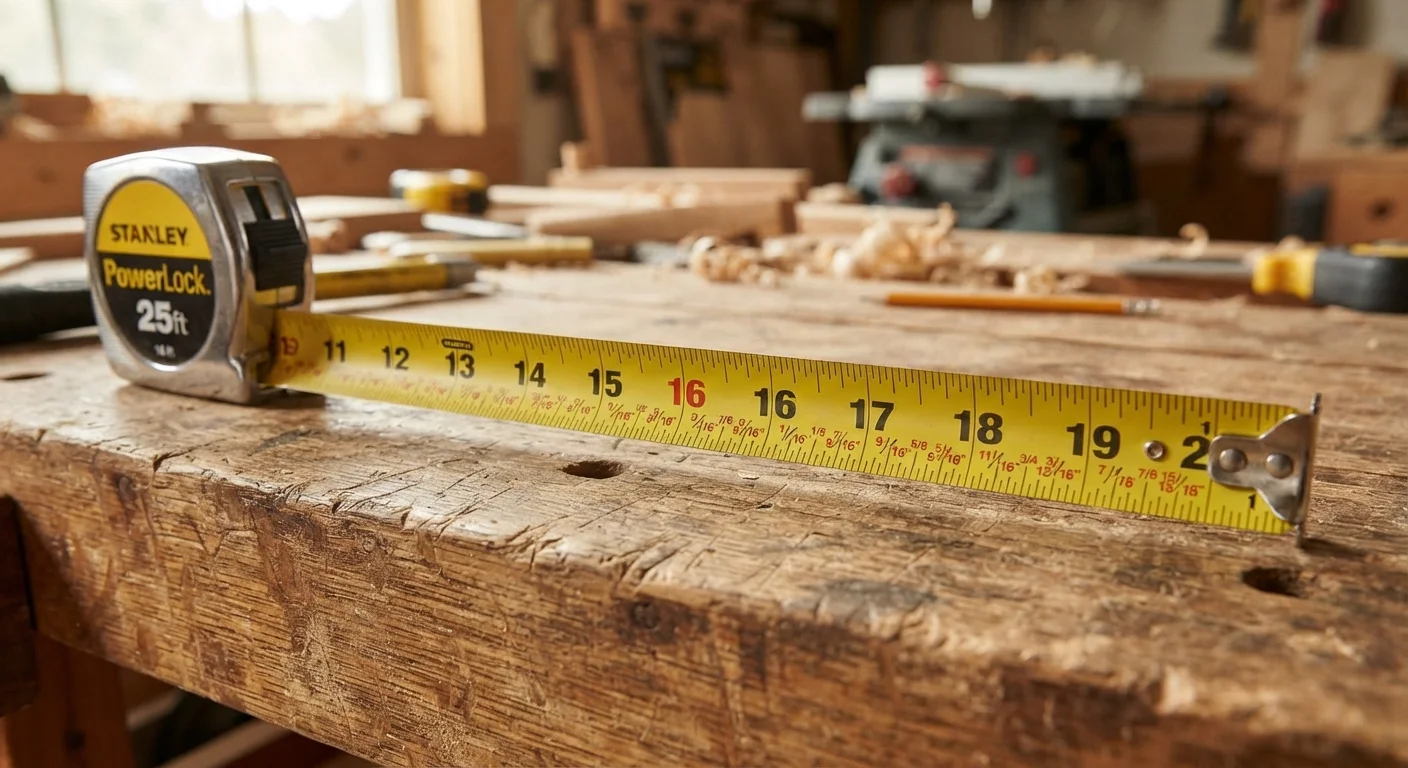
A tape measure is divided into inches, and each inch is further split into smaller equal parts using a series of lines of different lengths. The longer the line, the larger the fraction it represents. Once you understand the hierarchy of line lengths, reading any measurement becomes straightforward.
Most US tape measures divide each inch into 16 equal parts, making the smallest standard marking 1/16 of an inch. Some precision tapes go to 1/32 inch.
Why Those Little Lines Feel So Confusing
At first glance, a tape measure looks like a jumble of lines crowded into a tiny space. But there is a clear logic behind every single mark - and once you see it, you cannot unsee it. The confusion usually comes from not knowing that line length equals fraction size. Every tier of lines represents a different fraction, and taller lines always mean bigger fractions. That one principle unlocks everything else.
It also helps to remember that a standard US tape measure works in inches and fractions of an inch - not decimals. This trips up a lot of beginners who are used to calculators and digital measurements. Fractions feel old-fashioned, but they are perfectly precise for woodworking, hanging pictures, or cutting shelving.
US vs. Metric Tape Measures
Some tape measures show both inches (on one edge) and centimeters (on the other). Centimeter markings are simpler - each centimeter divides into 10 millimeters with uniform lines. If your project uses metric units, that side of the tape is easier to start with. Just be consistent and never mix the two systems in one project.
The Hierarchy of Lines, Explained Simply
Think of the markings on one inch of tape measure as a family with five members, each a different height:
- The inch mark - the tallest line of all, often printed with a large number beside it. This is your anchor point.
- The half-inch mark (1/2) - the second tallest line, sitting exactly in the middle of each inch. There is one per inch.
- The quarter-inch marks (1/4 and 3/4) - slightly shorter, splitting each half into two equal parts. There are two per inch.
- The eighth-inch marks (1/8, 3/8, 5/8, 7/8) - shorter still, splitting each quarter into two parts. There are four per inch.
- The sixteenth-inch marks - the shortest and most numerous lines, eight per inch, giving you the finest standard measurement.
To read any measurement, find the last full inch, then identify which line your object reaches and name its fraction. For example: 4 full inches, plus a mark that is two lines past the half-inch mark at the eighth-inch level = 4 and 5/8 inches.
Use a Pencil to Mark As You Go
Instead of trying to hold a measurement in your head, make a small pencil mark on your material the moment you read the tape. This eliminates the most common source of errors - forgetting the number between the tape and the pencil. Erase easily afterward, or sand it away on wood.
Putting It Into Practice
The fastest way to get comfortable is to measure something you already know the size of. Grab a standard sheet of paper - it is exactly 8.5 inches wide and 11 inches long. Hook the tape over one edge and verify both dimensions. You will immediately see the half-inch mark land right at 8.5 inches, which is a satisfying confirmation that you are reading it correctly.
Next, try measuring a smaller object - a phone, a book, or a cup. Write down your reading before you check it. This self-testing method builds muscle memory faster than just reading about it. Most people feel genuinely confident after measuring five or six objects this way.
1/16"
Smallest standard increment on most US tapes
Standard imperial tape measures sold in the US are typically graduated to 1/16 inch, suitable for the vast majority of home improvement tasks.
16"
Standard wall stud spacing highlighted on tapes
The 16-inch interval is a common standard in residential wall framing in the US, which is why many tape measures flag it with a distinct mark or color.
For home projects like hanging artwork or building simple shelves, you rarely need precision finer than 1/8 inch. Knowing that takes the pressure off mastering every sixteenth-inch mark right away - focus on inches, halves, and quarters first, then add eighths when you feel ready.
Measuring accurately is one of those small skills that pays dividends across dozens of household tasks, much like learning to read a financial statement clearly - once you understand the structure, the numbers stop being intimidating.