

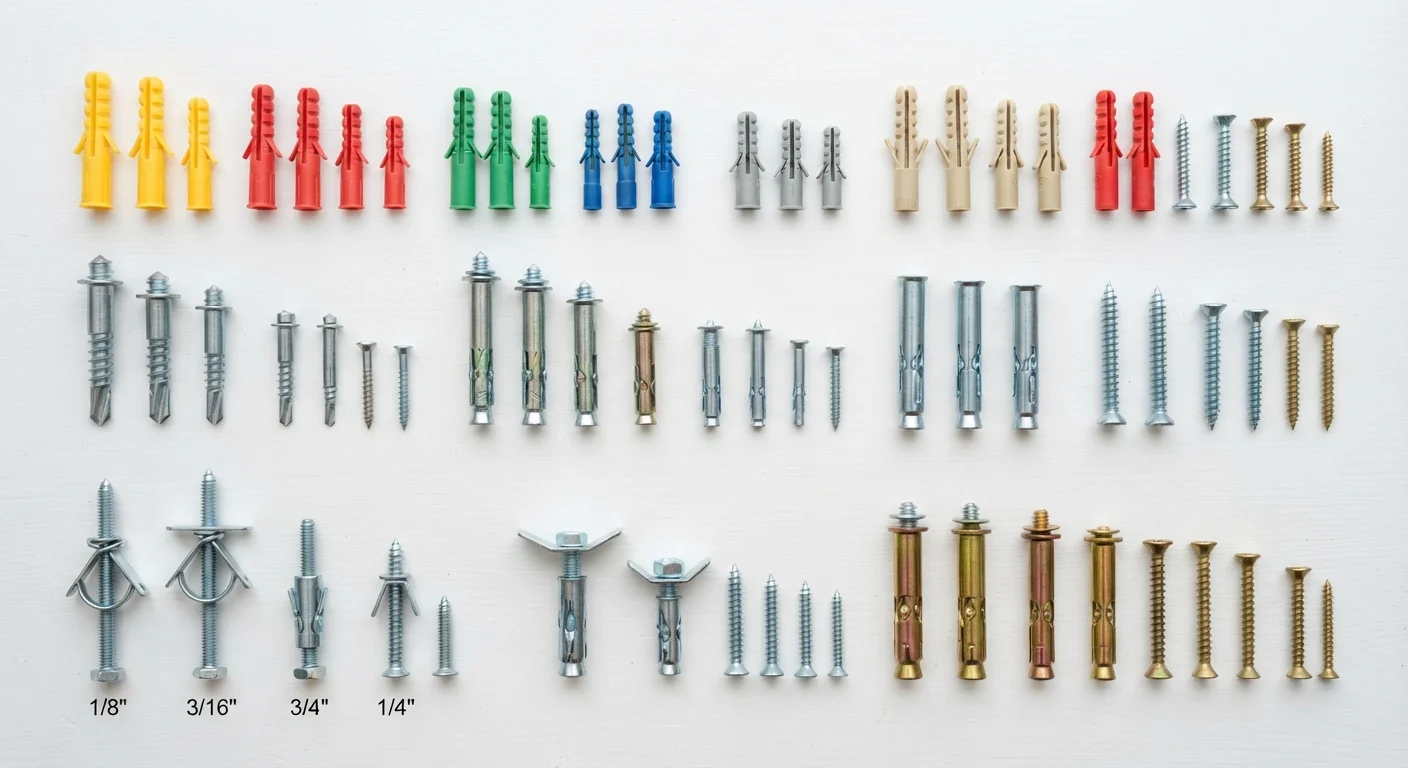
| Best for solid masonry (brick, concrete) | Rawlplug / expansion plug |
| Best for hollow drywall, light loads | Plastic expansion anchor or self-drilling anchor |
| Best for hollow drywall, heavy loads | Toggle bolt (butterfly anchor) |
| Strongest option (any wall type) | Screw directly into a wall stud |
| Typical drywall thickness (U.S. standard) | ½ inch (12.7 mm) |
| Toggle bolt typical shear rating (½-in drywall) | 50 lb+ per bolt (varies by size) |
Why the Wall Material Matters Before You Drill
Not all walls are created equal. Drywall, plaster, brick, concrete, and hollow-core doors each behave differently when you drive a fastener into them - and using the wrong anchor can mean a picture frame on the floor or, worse, a damaged wall. The golden rule: identify your wall material first, then select the fastener rated for that surface and the weight you're hanging.
Before reaching for any anchor, it's also worth knowing what's behind the surface. Hitting a stud - a vertical timber or metal framing member - means you can often skip anchors altogether and drive a screw directly. See our guide to locating wall studs for reliable methods before you commit to drilling.
| Best for solid masonry (brick, concrete) | Rawlplug / expansion plug |
| Best for hollow drywall, light loads | Plastic expansion anchor or self-drilling anchor |
| Best for hollow drywall, heavy loads | Toggle bolt (butterfly anchor) |
| Strongest option (any wall type) | Screw directly into a wall stud |
| Typical drywall thickness (U.S. standard) | ½ inch (12.7 mm) |
| Toggle bolt typical shear rating (½-in drywall) | 50 lb+ per bolt (varies by size) |
The Main Anchor Types: When and Where to Use Each
Understanding the differences between anchor types removes most of the guesswork from hardware store visits.
Rawlplugs (Expansion Plugs)
A rawlplug is a small ribbed plastic sleeve you push into a pre-drilled hole. As you drive a screw into it, the plug expands outward and grips the surrounding material. Rawlplugs are ideal for solid masonry walls - brick, concrete block, and stone - where the material itself provides the resistance. They are not designed for hollow walls, where there is nothing solid for them to expand against. Typical load ratings range from about 10 lb to 50 lb depending on plug diameter and masonry density.
Plastic Expansion Anchors (Hollow-Wall Anchors)
Similar in appearance to rawlplugs, hollow-wall plastic anchors are engineered for drywall and plaster. The anchor is inserted into a drilled hole; as the screw tightens, the back of the anchor flares open behind the wall surface, creating a broader bearing surface. These suit lighter loads - typically up to around 20-30 lb per anchor in standard ½-inch drywall.
Toggle Bolts (Butterfly Anchors)
Toggle bolts are the heavy-duty option for hollow walls. A spring-loaded metal wing collapses to pass through a drilled hole, then springs open flat against the back of the wall, distributing the load across a wide area. They are well-suited for drywall, plaster, and hollow masonry blocks when you need to hang heavier items such as shelving, mirrors, or TV mounts. Rated capacities vary, but a properly installed ¼-inch toggle bolt in ½-inch drywall can typically support 50 lb or more in shear (horizontal pull).
Self-Drilling (Threaded) Anchors
These metal or hard nylon anchors have coarse external threads that let you drive them directly into drywall without pre-drilling a pilot hole. A Phillips screwdriver or drill is all you need. They are quick to install and handle moderate loads - generally up to around 25-50 lb depending on the material and anchor size.
Rawlplug
A ribbed plastic sleeve inserted into a pre-drilled hole in solid masonry. It expands as a screw is driven in, gripping the surrounding material to hold the fastener in place.
Toggle bolt
A two-part hollow-wall fastener consisting of a machine bolt and a spring-loaded metal wing. The wing passes through the wall and opens behind it, spreading the load across the wall's inner surface.
Shear load
A force that pulls a fastener downward or sideways - the typical direction of load when hanging objects. Most anchor ratings specify shear capacity rather than pull-out (straight out from the wall) capacity.
Pilot hole
A small hole drilled into a wall before inserting an anchor, sized to match the anchor's outer diameter. It ensures accurate placement and prevents the wall material from cracking.
Stud
A vertical structural framing member - usually timber or metal - hidden behind wall surfaces. Screwing directly into a stud is the strongest hanging method and often eliminates the need for an anchor.
Load rating
The maximum weight a wall anchor is rated to support under defined test conditions. Always check this figure on anchor packaging against the weight of what you plan to hang.
Matching Anchor to Load: A Practical Reference
50 lb+
Typical shear capacity of a ¼-in toggle bolt in ½-in drywall
Manufacturer specifications vary; always check the rating on your specific anchor's packaging.
20-30 lb
General load limit for a plastic expansion anchor in drywall
Performance depends on drywall thickness, anchor diameter, and installation quality.
3×
Margin of safety often recommended above the item's actual weight
A general DIY rule of thumb: choose an anchor rated for at least three times the weight of what you're hanging.
As a general guideline, categorize what you're hanging before selecting an anchor:
- Light loads (under 10 lb): Small picture frames, lightweight clocks - any plastic expansion anchor in drywall or a rawlplug in masonry is adequate.
- Medium loads (10-30 lb): Medium framed artwork, coat hooks, small shelves - use self-drilling anchors or hollow-wall expansion anchors in drywall; standard rawlplugs in solid masonry.
- Heavy loads (30-75 lb): Large mirrors, floating shelves, cabinet hardware - toggle bolts are the right call in hollow walls. In masonry, use a heavy-duty expansion anchor matched to the hole diameter.
- Very heavy loads (over 75 lb): Television mounts, heavy shelving units - locate a stud whenever possible and screw directly into framing. If studs aren't available, consult a hardware specialist or qualified tradesperson about structural anchors appropriate to your specific wall.
Note: Load ratings on anchor packaging are a manufacturer reference under ideal conditions. Real-world factors - wall condition, installation quality, and the direction of the load - all affect performance. When in doubt, distribute the load across multiple anchors or find a stud.
When to Call a Professional
If you need to hang something extremely heavy - such as a large wall-mounted television, a full cabinet run, or anything structural - consult a qualified tradesperson rather than relying solely on anchors. Work involving electrical cables, plumbing pipes, or load-bearing walls hidden behind surfaces also warrants professional assessment before drilling. Always verify local building codes for any installation that may require a permit.