

Key Takeaways
Summary
18 items · 5-10 minutes
Why a Pre-Journey Check Matters Every Time
Most drivers reserve safety checks for long road trips, but the statistics tell a different story - a large proportion of breakdowns and collision-contributing mechanical faults occur on routine, everyday journeys. A tyre that's slowly losing pressure doesn't wait for a highway to cause trouble.
This checklist is designed for every drive, whether you're heading to the grocery store or crossing three states. Run through it before you turn the key. For a deeper look at month-to-month vehicle health, see our monthly car check guide - it pairs well with this daily habit.
If you're a newer driver, our article on what new drivers should know before their first solo trip covers the broader safety picture beyond the vehicle itself.
Tyres
Lights and Visibility
Mirrors and Controls
Fluids and Fuel
Documents and Emergency Essentials
Tools and Items to Have on Hand
You don't need a full toolkit to run this check - most steps are purely visual or tactile. That said, a couple of inexpensive items will make the process more accurate and useful over time.
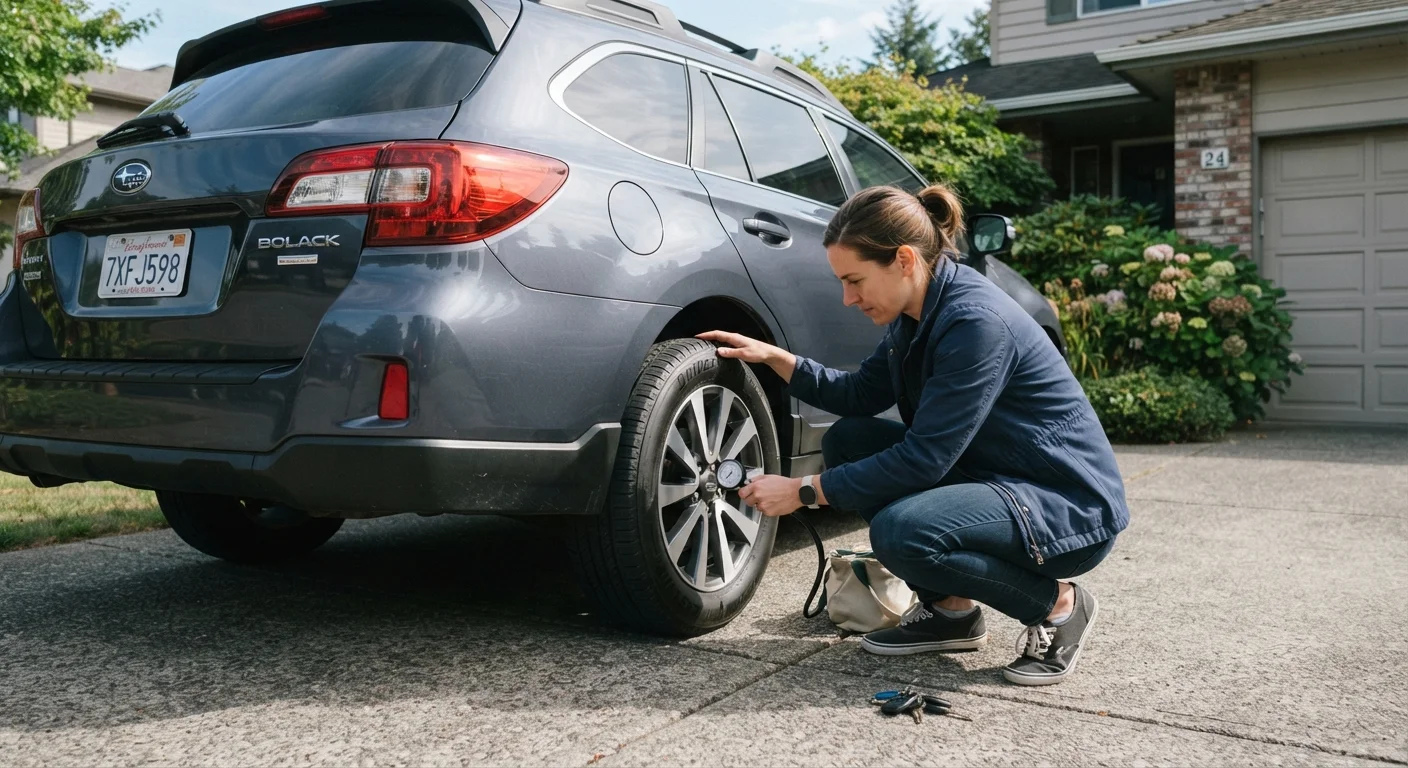
Tyre pressure gauge
Accurately measures tyre inflation so you can match the manufacturer's recommended PSI.
Tread depth gauge
Gives a precise measurement of remaining tread depth across all four tyres.
Portable LED torch or flashlight
Helps you inspect tyres, undercarriage, and fluid levels in low-light conditions.
Windshield washer fluid (topped up in advance)
Ensures washer jets are ready to clear road grime or insects mid-journey.
Never Check Coolant With a Hot Engine
Opening the coolant reservoir or radiator cap on a hot engine can cause pressurised steam or scalding fluid to escape suddenly. Always wait at least 30 minutes after switching off the engine before checking coolant levels. If coolant is visibly very low and you need to drive, consult a qualified mechanic before proceeding.
For a broader overview of what responsible car ownership involves day to day, explore the Car Ownership Basics hub. And if you've recently acquired a vehicle, things to sort out before driving away in a new car is a useful companion read.
Making This a Lasting Habit
The goal isn't perfection on day one - it's building a routine so automatic that skipping the check feels wrong. Attach it to something you already do every time you leave: putting on your seatbelt, unlocking the car, or starting the engine. Over time, your eye will catch problems faster because you've trained it to look.
For a comprehensive resource covering defensive driving, hazard awareness, and vehicle checks from learner to long-distance driver, the complete road safety resource is worth bookmarking.
Don't Drive on a Tyre You're Unsure About
If a tyre looks visibly damaged, feels soft after inflation, or has tread that is at or below the legal minimum, do not drive on it. A tyre failure at speed is extremely dangerous. Have the vehicle inspected by a tyre professional before setting off, even if it means delaying your journey.
This article is for general informational purposes only. If you suspect a serious mechanical fault, have your vehicle inspected by a qualified mechanic before driving.