

Key Takeaways
Why Tyre Pressure Is Worth Your Attention
Tyre pressure is one of the simplest maintenance tasks available to any driver - yet surveys consistently show it's among the most commonly neglected. The consequences are real and cumulative. Underinflated tyres flex more with each rotation, generating excess heat, wearing the tread unevenly, and reducing your vehicle's fuel efficiency. Overinflated tyres have a smaller contact patch with the road, which can reduce grip and make handling feel skittish, especially in wet conditions.
Neither extreme is safe, and both shorten tyre life - meaning what seems like a minor oversight can quietly cost money over time. This is precisely the kind of habit covered in keeping running costs under control: small, consistent checks that pay off without requiring a mechanic visit.
Tyres also lose pressure gradually on their own - typically around 1 PSI per month under normal conditions - and lose more when temperatures drop in cooler months. Your car's TPMS warning light (if your vehicle has one) only illuminates when pressure is significantly low, often 25% or more below the recommended level. By then, you've already been driving on compromised tyres. Regular manual checks catch the problem earlier.
What you will need
How to Check and Correct Your Tyre Pressure
The process is straightforward and takes under 15 minutes for all four tyres. Before you begin, gather what you need:
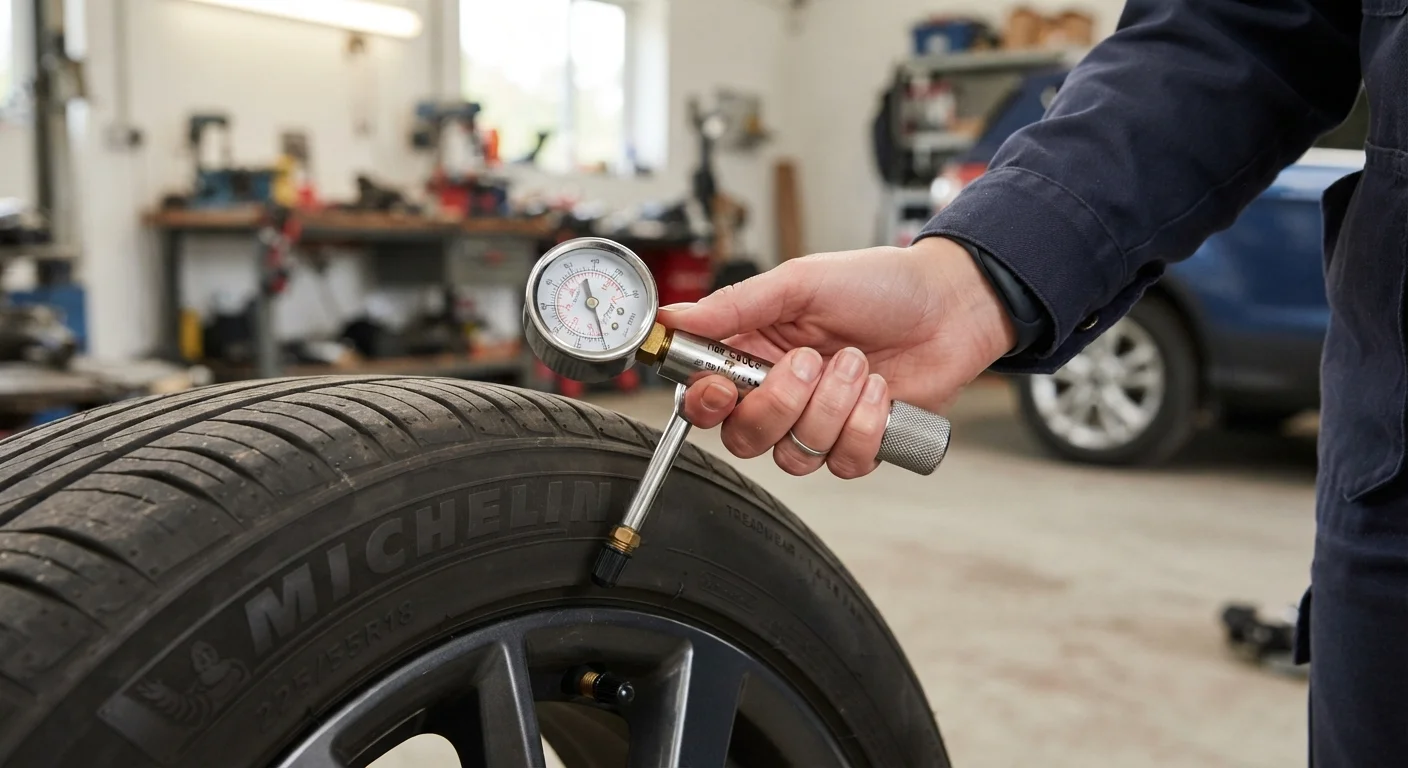
Tyre Pressure Gauge
Measures the air pressure inside each tyre in PSI (pounds per square inch) so you can compare it against the recommended level.
Air Compressor or Gas Station Air Pump
Used to add air to tyres that are underinflated; many gas stations have coin-operated pumps available.
Owner's Manual
Contains the manufacturer's exact recommended tyre pressure for your specific vehicle - more reliable than guessing.
Tyre Valve Cap Holder or Small Tray
Keeps the small valve stem caps from rolling away while you work on each tyre.
Find the correct pressure for your tyres
Look up the manufacturer's recommended tyre pressure - expressed in PSI - before you touch a single valve. Check the sticker inside the driver's door jamb or consult your owner's manual. For a deeper dive into using that manual effectively, see Reading Your Owner's Manual.
Do not use the number printed on the tyre sidewall. That number is the tyre's maximum pressure limit, not the recommended operating pressure for your vehicle. Front and rear tyres sometimes have different recommended pressures, so note both.
Check tyres when they are cold
Tyre pressure readings are most accurate when the tyres are 'cold' - meaning the car has been parked for at least three hours or driven fewer than one mile at low speed. Heat from driving causes the air inside to expand, which raises the pressure reading and can lead you to release air you actually need.
Early morning, before your first drive of the day, is generally the best time to check.
Remove the valve cap and take a reading
Locate the valve stem on the inside edge of the wheel - it's a small rubber or metal nub. Unscrew the cap and place it somewhere safe. Press your tyre pressure gauge firmly and squarely onto the valve stem. You'll hear a brief hiss; that's normal. Read the pressure shown on the gauge display or dial.
Repeat this for all four tyres, and check the spare if your vehicle has one.
Inflate or deflate to the correct level
Compare each reading to the recommended PSI from Step 1.
- Underinflated: Use an air compressor or gas station pump to add air in short bursts, checking the pressure frequently until you reach the target.
- Overinflated: Use the small pin or release button on the back of most gauges - or a thin tool pressed into the valve stem's centre pin - to release air in small amounts. Check pressure after each release.
Aim to be within 1-2 PSI of the recommended figure.
Replace valve caps and record the date
Once all four tyres are at the correct pressure, screw the valve caps back on finger-tight. Caps keep dirt and moisture out of the valve stem, which helps maintain an accurate seal over time.
Note the date you checked - either in your phone, your glove box, or your owner's manual. Aim to repeat this process every month and before any long road trip. This check pairs naturally with the monthly car check routine that covers other quick-but-important inspection points.
For a broader look at how this task fits into a complete vehicle care routine, see routine maintenance every car owner should know.
Make It a Monthly Habit
Tie your tyre pressure check to something you already do once a month - paying a bill, filling up the fuel tank, or the first day of each month. Consistency matters more than perfect timing. Pairing it with the monthly car check makes it even easier to keep on top of your vehicle's condition without extra effort.
This article is for general information purposes only. Always refer to your vehicle's owner's manual for manufacturer-specific guidance, and consult a qualified mechanic if you notice persistent pressure loss, visible tyre damage, or unusual wear patterns.