

Key Takeaways
Engine Oil
Engine oil is a fluid that circulates through your car's engine to reduce friction between moving metal parts. It also helps carry heat away from those parts, cleans microscopic debris, and protects against corrosion. Without it, an engine's internal components would grind together and fail within minutes.
Engine oil is rated by viscosity - its resistance to flow - using grades like 5W-30 or 10W-40. The numbers describe how the oil behaves at cold start (the first number) and at operating temperature (the second).
What Engine Oil Actually Does
Most drivers know oil is important, but fewer understand the full range of jobs it performs. Engine oil does four things simultaneously:
- Lubricates: It forms a thin film between metal parts - pistons, crankshaft bearings, camshaft lobes - so they move against each other without direct contact.
- Cools: Oil absorbs heat from parts the coolant system can't reach directly and carries it back to the oil pan to dissipate.
- Cleans: Detergent additives in modern oil pick up soot, metal particles, and combustion byproducts and hold them in suspension until the oil is drained at a service.
- Protects: Anti-corrosion additives in the oil coat metal surfaces, slowing oxidation and wear over time.
For a broader look at the fluids your car depends on, see Car Fluid Basics: What Each One Does Under the Hood.
“Oil is the lifeblood of your engine. It's not just about lubrication - it's about protecting every moving part from the moment you turn the key.”
— Dave Cappert, Technical Trainer, National Institute for Automotive Service Excellence (ASE)
What Happens When Oil Runs Low
When oil level drops too far, the oil pump can no longer circulate enough fluid to all engine surfaces. The consequences escalate quickly:
- Increased friction: Parts that relied on an oil film now make direct metal contact, generating intense heat and accelerating wear.
- Overheating: Without oil carrying heat away from internal components, temperatures spike in areas the coolant system doesn't cover.
- Sludge buildup: Degraded, low-volume oil loses its ability to suspend contaminants, leaving thick deposits that block oil passages.
- Engine seizure: In severe cases, components weld themselves together from heat and friction. At that point, the engine typically needs a full rebuild or replacement.
A low-oil warning light means the situation is already critical - don't treat it as a reminder to schedule an appointment. Pull over safely as soon as possible and check the level before driving further.
Keep a Small Bottle of Oil in Your Car
Store a sealed quart of the correct oil type (check your owner's manual) in your trunk. If your level ever drops unexpectedly, you can top up before driving further rather than risking engine damage. Make sure the cap is secure to avoid spills.
How to Check Your Oil Level
Checking your oil is one of the simplest things you can do as a car owner. Here's how:
- Park on level ground and let the engine cool for at least 10 minutes if it's been running.
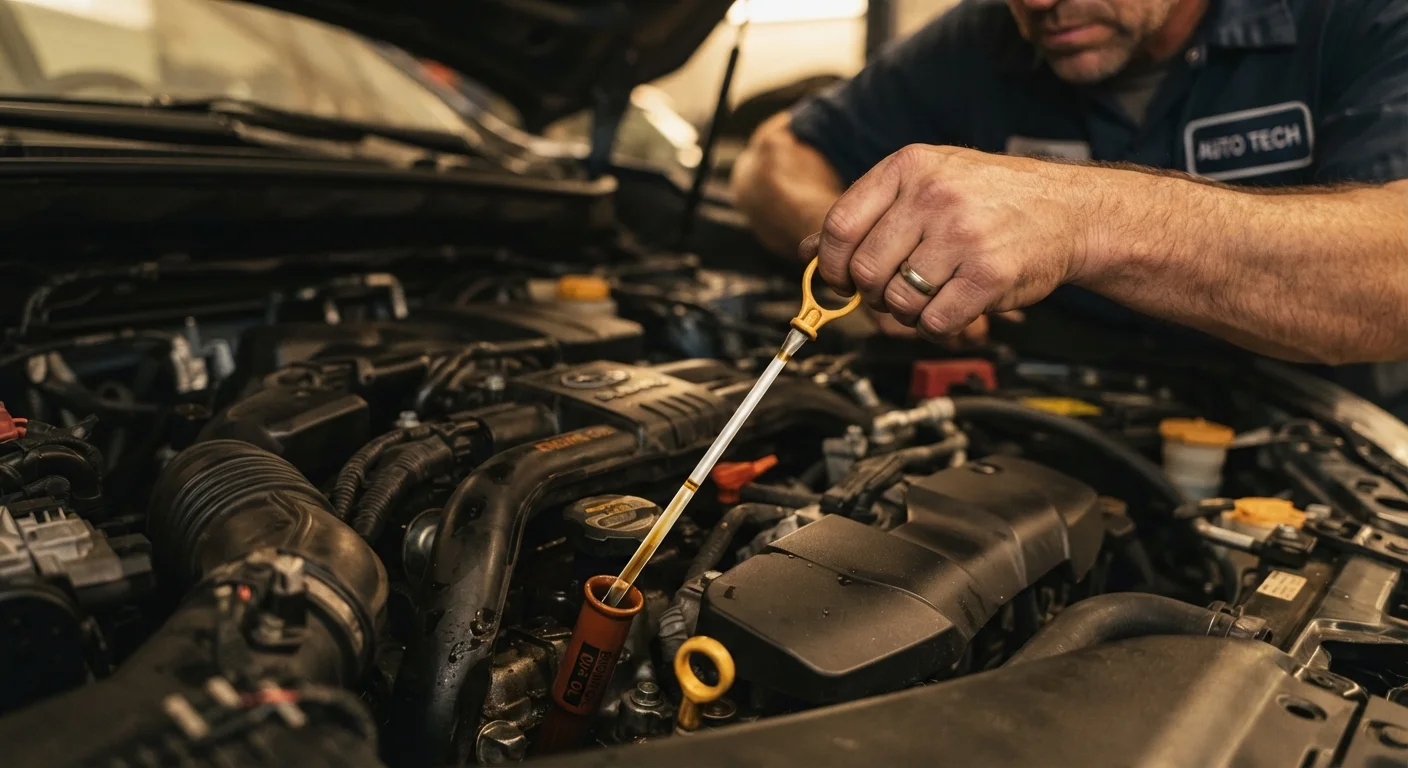
- Open the hood and locate the dipstick - it usually has a brightly colored handle (yellow or orange) and is labeled with an oil can symbol.
- Pull the dipstick out fully and wipe it clean with a rag or paper towel.
- Reinsert it all the way, then pull it out again.
- Read the level: the oil should be between the two marks (MIN and MAX, or equivalent). If it's at or below the lower mark, add oil carefully using the type specified in your owner's manual.
- Also note the oil's color and texture. Fresh oil is amber and clear. Very dark, gritty oil suggests it's due for a change.
Oil checks fit naturally into routine maintenance every car owner should know, alongside tyre pressure and other fluid checks.
~5 min
Time until engine damage without oil circulation
Automotive engineering sources indicate an engine running without adequate oil pressure can sustain serious damage in just a few minutes due to metal-on-metal friction.
1 qt per 1,000 mi
General threshold for investigating oil consumption
Many mechanics use consumption beyond roughly one quart per 1,000 miles as a guideline to investigate possible leaks or internal engine wear.
How Long Oil Actually Lasts - and Common Misconceptions
The old rule of changing oil every 3,000 miles was standard advice for older engines and conventional oil - but many modern vehicles with synthetic oil can go significantly longer between changes. Your owner's manual is the authoritative source for your specific car.
Factors that affect how quickly oil degrades include:
- Driving style (frequent short trips, stop-and-go traffic, or towing accelerate oil breakdown)
- Engine age and condition
- Whether the vehicle uses conventional or synthetic oil
Common car maintenance myths - including the universal 3,000-mile rule - can end up costing drivers money or leading to unnecessary service. Always cross-check popular advice against your owner's manual. If you're weighing oil types, our explainer on synthetic vs. conventional engine oil walks through the key differences in plain terms.
Your Owner's Manual Overrides General Advice
Oil change intervals vary significantly between makes, models, and engine types. Some vehicles have an oil life monitoring system that calculates change intervals based on actual driving conditions. Always follow the interval your manufacturer recommends rather than defaulting to a one-size-fits-all rule.