

Key Takeaways
Our Verdict
Each aquarium type offers a rewarding experience, but they vary significantly in complexity and cost. Cold-water tanks are the most forgiving for beginners, tropical freshwater tanks offer a colorful middle ground, and marine setups deliver stunning results for those ready to invest serious time and money.
| Best for | Recommended |
|---|---|
| First-time fish keepers on a budget | Cold-Water Tank |
| Hobbyists wanting colorful fish with manageable care | Tropical Freshwater Tank |
| Experienced keepers seeking a showpiece aquarium | Marine (Saltwater) Tank |
Why the Type of Fish You Choose Matters More Than You Think
When most people picture a home aquarium, they imagine brightly colored fish gliding through clear water. What they may not realize is that "aquarium fish" is a broad category covering three very different worlds: cold-water, tropical freshwater, and marine (saltwater) environments. Each has its own water temperature requirements, equipment needs, and ongoing care demands.
Choosing the wrong setup for your lifestyle is one of the most common reasons new fish keepers struggle. This guide breaks down the key differences so you can go in with realistic expectations - and give your fish the environment they actually need to thrive.
If you're still figuring out the basics of tank setup, our guide to setting up your first freshwater aquarium is a great place to start.
Cold-Water Fish: Simpler, But Not Simple
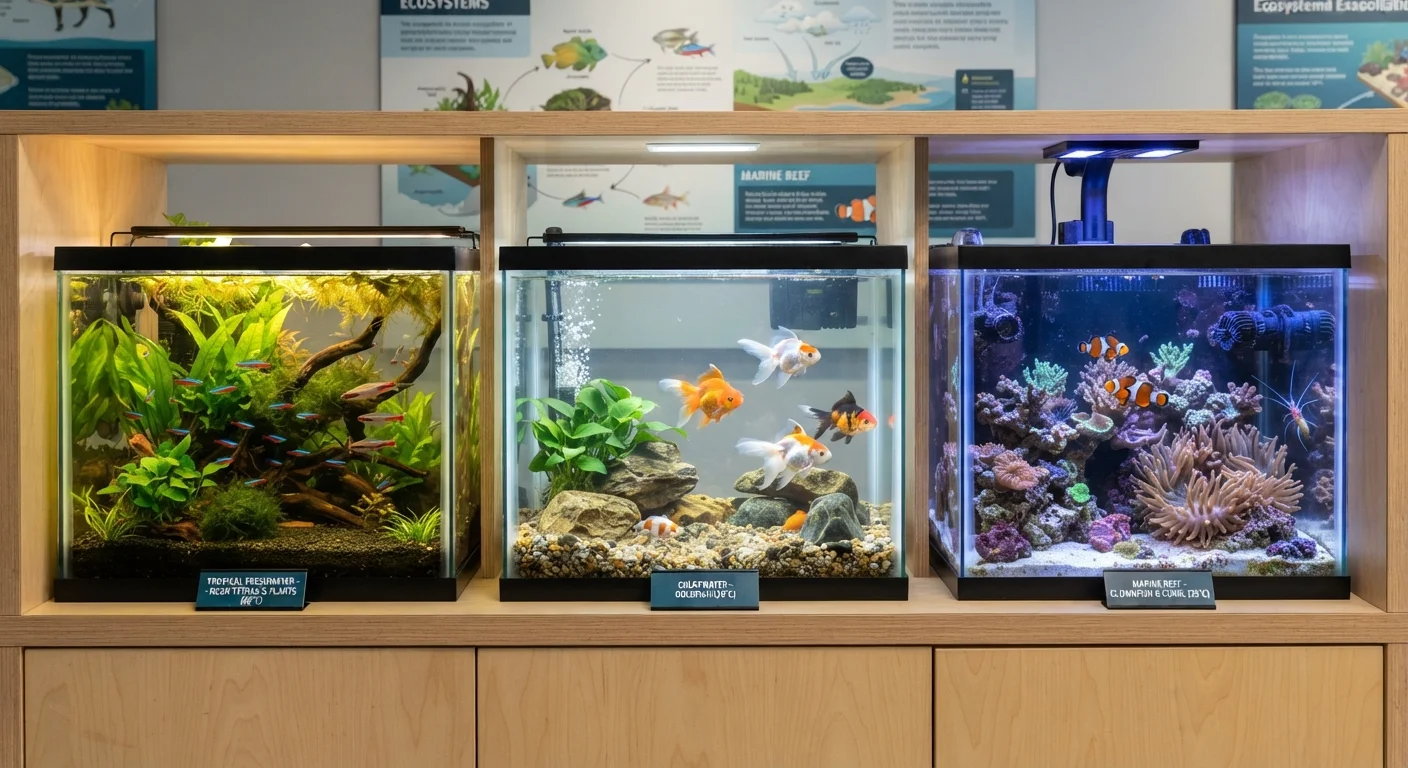
Cold-water fish - most famously goldfish - thrive in unheated tanks, typically between 60-72°F. This removes the need for an aquarium heater and makes the setup less equipment-heavy than the alternatives. However, cold-water tanks are frequently underestimated.
Goldfish, for example, are heavy waste producers that require excellent filtration and regular water changes. They also grow significantly larger than most people expect. A common goldfish can reach 10-12 inches in a proper environment, meaning a small bowl is never an appropriate long-term home.
Goldfish are not the low-maintenance pets their reputation suggests - but with the right setup, they can live 10-15 years and become genuinely engaging companions. Other cold-water species include white cloud mountain minnows and certain varieties of weather loach.
Start With a Larger Tank Than You Think You Need
For cold-water fish like goldfish, a larger tank isn't just a luxury - it's a welfare requirement. Bigger water volumes are also more forgiving of fluctuations in water quality, giving you more time to catch and correct problems. For beginners of any aquarium type, a 20-gallon tank is generally a safer starting point than a 10-gallon.
Tropical Freshwater Fish: Color, Variety, and Moderate Challenge
Tropical freshwater tanks are the most popular type among hobbyists, and for good reason. Species like neon tetras, bettas, guppies, and cichlids offer extraordinary color and personality. These fish require water kept consistently between 74-80°F, which means a reliable heater is essential.
The key challenge with tropical setups is maintaining stable water parameters. Temperature swings, ammonia spikes, and pH fluctuations can stress or kill fish quickly. Cycling the tank before adding fish - allowing beneficial bacteria to establish - is a non-negotiable first step.
Equipment costs are moderate: you'll need a heater, a quality filter, a thermometer, and a light if you plan to keep live plants. Water testing kits are also essential. The diversity of compatible species means tropical tanks offer tremendous creative freedom in terms of aquascaping and community tank design.
| Cold-Water | Tropical Freshwater | Marine (Saltwater) | |
|---|---|---|---|
| Typical Temperature Range | 60-72°F | 74-80°F | 75-80°F |
| Heater Required | No | Yes | Yes |
| Setup Cost | Low-Moderate | Moderate | High |
| Ongoing Complexity | Low-Moderate | Moderate | High |
| Beginner Friendliness | Most beginner-friendly | Good for beginners | Best for experienced keepers |
| Species Variety | Limited | Very broad | Broad, with coral/inverts |
| Water Chemistry Focus | Ammonia, nitrite, nitrate | Ammonia, pH, hardness | Salinity, pH, alkalinity, calcium |
Marine Fish: Stunning Results, Serious Commitment
Marine, or saltwater, aquariums are widely considered the most visually spectacular - and the most demanding. Fish like clownfish, tangs, and dottybacks live alongside live coral and invertebrates in a carefully balanced ecosystem that mimics ocean conditions.
Saltwater tanks require precise management of salinity (measured as specific gravity), pH, alkalinity, calcium, and magnesium levels, among others. This demands a more complex suite of equipment: a protein skimmer, specialized lighting for reef tanks, and often a sump (a secondary filtration chamber beneath the tank). Equipment and livestock costs are significantly higher than freshwater setups.
Marine fish are also generally more sensitive to water quality issues, meaning errors have faster and more severe consequences. Most experts recommend building experience with freshwater tanks before attempting a marine setup. That said, for those ready to make the commitment, a healthy reef tank is genuinely one of the most breathtaking things you can keep in a home.
Don't Rush the Transition to Marine
Jumping into a marine aquarium without prior fishkeeping experience is one of the most common - and costly - mistakes new hobbyists make. Marine fish and coral are sensitive and expensive, and the learning curve for water chemistry is steep. Consider spending at least a year successfully maintaining a tropical freshwater tank before moving to saltwater. This investment in experience significantly improves your chances of a thriving reef.