

Key Takeaways
Good Debt vs. Bad Debt
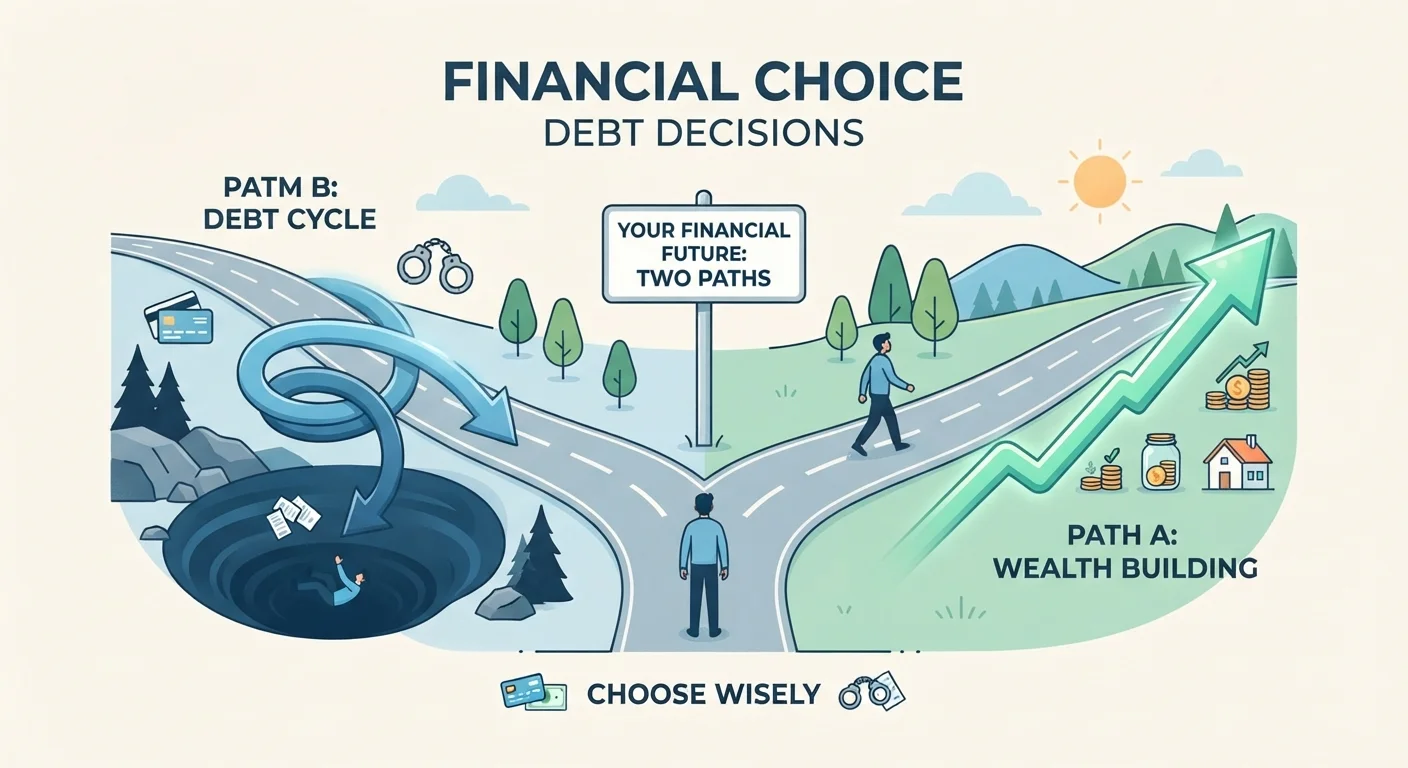
"Good debt" is borrowing that is expected to improve your financial position over time - such as a student loan that leads to higher earnings or a mortgage that builds home equity. "Bad debt" typically costs more than it returns, often funding short-term wants at high interest rates. In practice, many debts fall somewhere in between, depending on your circumstances, the interest rate, and how the borrowed money is used.
Economists sometimes define good debt by whether the financed asset appreciates or generates income exceeding the debt's cost; however, individual outcomes vary widely and are not guaranteed.
Why the Good/Bad Framing Exists
The idea that some debt is "good" and some is "bad" is a useful shorthand - but it was never meant to be a rigid rule. The framing emerged to help everyday borrowers make sense of a complicated system by focusing on one central question: does this debt put you in a better financial position, or a worse one?
When borrowing is used to fund something that holds or grows in value - or that generates more income than the loan costs - it can work in your favour over time. When it funds spending that disappears quickly while the interest bill lingers, the math tends to work against you.
This is general financial education, not personalised advice. For decisions about your own borrowing, consult a licensed financial adviser or a nonprofit credit counselor who can look at your full picture.
The Good/Bad Label Has Real Limits
Even widely accepted "good" debt carries risk. A mortgage can become unmanageable after a job loss; a student loan can outlast the career it was meant to fund. Treat the good/bad framework as a starting point for evaluation, not a final verdict. Your specific interest rate, income, and financial cushion all shape the real answer.
What Earns the Label "Good Debt"
Three debt types are most often described as good debt, each for a specific reason:
- Mortgages - Real estate can build equity over time, and mortgage interest rates are generally lower than consumer loan rates. That said, a mortgage you can't comfortably afford is not good debt by any definition.
- Student loans - Higher education can meaningfully increase lifetime earnings, which is why these loans are often framed as an investment. The return depends heavily on the field of study, the total borrowed, and whether the degree is completed.
- Small-business loans - Borrowing to start or grow a business has the potential to generate income that outpaces the loan's cost. Risk is real and significant; most financial professionals treat this as a calculated bet, not a guaranteed win.
Notice that none of these are unconditionally good. The label applies when the expected benefit - increased earnings, asset equity, business revenue - plausibly justifies the cost and risk of borrowing.
~$17T
Total US household debt outstanding
According to the Federal Reserve Bank of New York's Household Debt and Credit Report, total US household debt has exceeded $17 trillion, with mortgages comprising the largest share.
20%+
Average credit card interest rate
Federal Reserve data has shown average credit card interest rates surpassing 20% in recent years, making revolving balances among the most expensive common forms of consumer debt.
~$37,000
Average federal student loan debt per borrower
The Federal Student Aid office has reported that the average federal student loan balance per borrower is roughly $37,000, underscoring why repayment planning matters before and after graduation.
What Makes Debt "Bad"
Bad debt is most clearly identified by two features: a high interest rate and no lasting financial benefit. The classic example is carrying a balance on a high-rate credit card to fund everyday spending - meals, clothing, entertainment - that provides no return.
When interest compounds on a balance you're not paying down quickly, the total cost can far exceed the original purchase price. To understand exactly how interest rate, balance, and time interact, see our guide on how interest, balance, and time interact.
Payday loans, certain rent-to-own arrangements, and some personal loans with very high APRs (annual percentage rates) also fall into this category. "APR" means the yearly cost of borrowing expressed as a percentage, including fees - it's one of the most important numbers to check before signing any loan agreement. For a full breakdown of key borrowing terms, the Debt Glossary is a useful reference.
The Grey Area Is Bigger Than You Think
A meaningful portion of everyday debt doesn't fit cleanly into either bucket. Consider:
- Auto loans - A car is a depreciating asset (it loses value over time), so auto debt doesn't build equity. But transportation often enables employment. Whether the loan is beneficial depends on the interest rate, your alternatives, and how essential the vehicle is to your income.
- Medical debt - Taking on debt to address a health emergency isn't a spending choice - it's often unavoidable. The moral framing of "good" or "bad" doesn't really apply, but the financial management still matters.
- Home equity borrowing used for renovations - Using equity in your home to fund improvements can increase property value, making it potentially productive. Using the same borrowing for a vacation is a different calculation entirely.
The grey area is where honest self-assessment matters most. Ask: what is this debt actually paying for, what will it cost me in total, and can I repay it without straining my budget?
Start With a Simple Debt Inventory
List every debt you carry, its current balance, its interest rate, and its monthly payment. This single exercise often reveals which debts are costing you the most and where to focus first. You don't need to solve everything at once - clarity is a productive first step.
A More Useful Way to Think About Your Debt
Rather than sorting your debts into two boxes, try evaluating each one against three questions:
- What is the interest rate? - Lower rates generally mean the debt costs less over time and leaves more room for benefit. A high rate demands a high return to justify the borrowing.
- What did or will the money produce? - Asset equity, increased income, and essential access (like transportation for work) are productive purposes. Consumable spending with no lasting return is not.
- Can you sustain the payments? - Even well-structured debt becomes harmful if monthly payments crowd out savings, emergency funds, or other essentials.
If you're managing multiple debts and wondering whether consolidating them makes sense, our explainer on what debt consolidation actually does walks through how that process works and where its limits lie.
This article is for general informational and educational purposes only and does not constitute personalised financial, legal, or investment advice. Consult a qualified financial professional before making decisions about borrowing or debt management.