

Key Takeaways
Start here
What Personal Finance Actually Means
Next
Know Your Numbers: Income and Expenses
Then
Building Your First Budget
When you're ready
Starting to Save - Even Small Amounts
Also important
Understanding Debt Basics
Keep going
Your Next Steps Forward
What Personal Finance Actually Means
Personal finance is not a subject reserved for accountants or wealthy investors. At its core, it simply means making intentional decisions about the money you earn, spend, save, and owe. Everyone practices personal finance in some form - the question is whether you're doing it by default or by design.
For beginners, the goal isn't perfection. It's awareness. When you understand how money flows through your life, you gain the ability to direct it rather than wonder where it went. This guide walks you through the foundational concepts in plain language so you can build that awareness starting today.
Cash flow
The difference between the money coming into your life (income) and the money going out (expenses) each month. Positive cash flow means you have money left over; negative means you're spending more than you earn.
Net income
Your take-home pay after taxes and other deductions are removed from your gross (total) earnings. This is the number you actually budget from.
Budget
A written plan that assigns every dollar of your income to a specific purpose - needs, wants, savings, or debt - before the month begins.
Emergency fund
A separate savings reserve set aside exclusively for unexpected, necessary expenses - like a car repair or medical bill - so that surprises don't derail your financial plan.
Interest
The extra cost a lender charges you for borrowing money, usually expressed as a percentage of the outstanding balance per year. Higher interest rates mean debt grows faster if unpaid.
Fixed expense
A monthly cost that stays the same amount each month, such as rent or a car payment. These are easier to plan for because the amount doesn't change.
Variable expense
A monthly cost that changes in amount from month to month, such as groceries, gas, or dining out. Tracking these carefully reveals the most opportunity to adjust spending.
This article provides general financial education and is not personalized financial advice. For guidance specific to your circumstances, consult a licensed financial professional.
Know Your Numbers: Income and Expenses
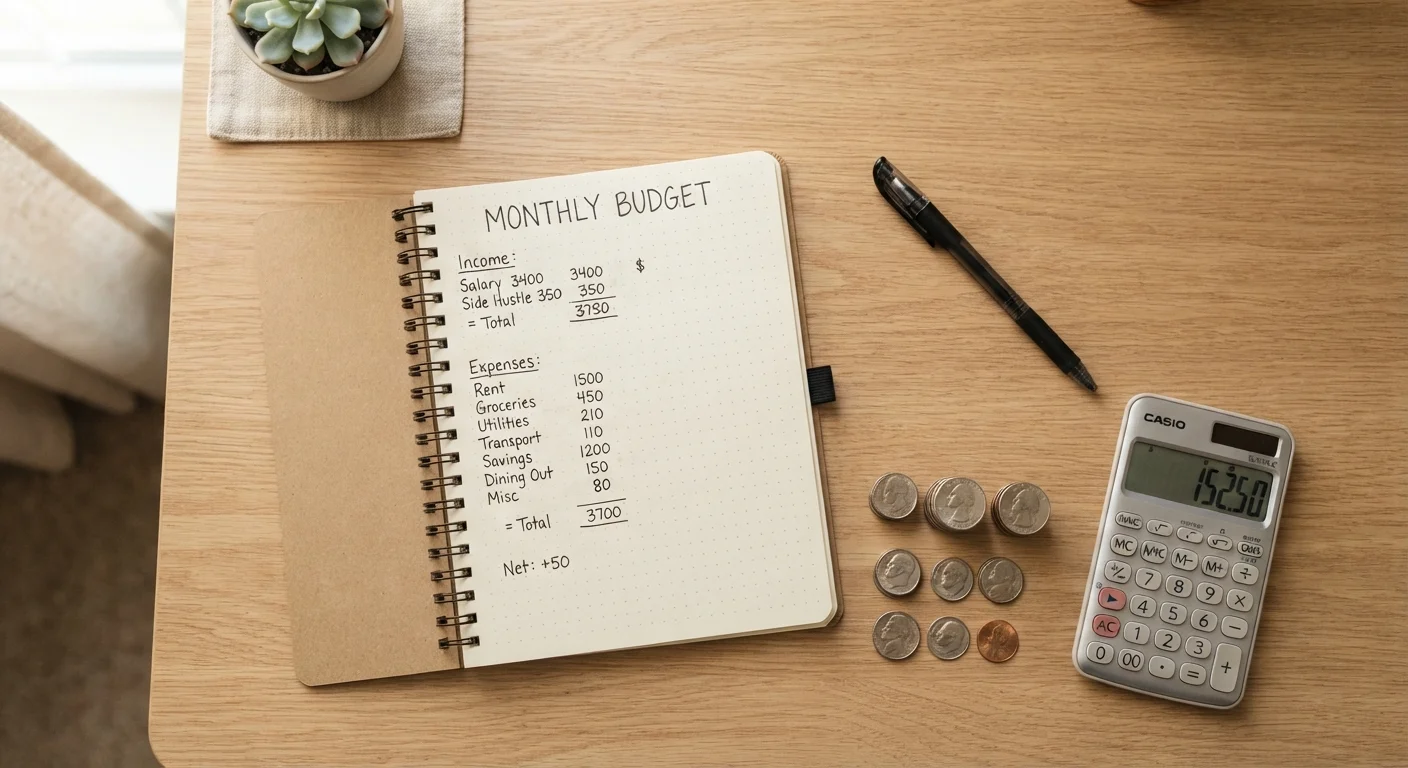
Before you can build any financial plan, you need a clear picture of two things: how much money comes in each month, and how much goes out. This is your cash flow - the difference between what you earn and what you spend.
Start by listing every income source: your paycheck after taxes (also called take-home pay or net income), any side income, and recurring transfers you reliably receive. Then list every expense - fixed costs like rent and insurance that stay the same each month, and variable costs like groceries and gas that fluctuate.
Don't estimate - pull up your bank statements from the past two or three months to get real numbers. Most people are surprised by how much small, recurring purchases add up. This honest accounting is not about judgment; it's about clarity.
Use Real Data, Not Estimates
When calculating your expenses, pull actual bank and credit card statements rather than guessing from memory. Most people underestimate their spending by 20-30% when they rely on recollection alone. Two to three months of real data gives you a reliable average to build your budget on.
Building Your First Budget
A budget is simply a written plan for your money - you decide in advance where each dollar goes rather than discovering after the fact. One beginner-friendly framework is the 50/30/20 rule:
- 50% to needs - housing, utilities, groceries, transportation, minimum debt payments
- 30% to wants - dining out, subscriptions, hobbies, entertainment
- 20% to savings and extra debt repayment
These percentages are a starting point, not a rigid prescription. If you live in a high-cost city, your needs may take up more than 50%. That's fine - adjust the framework to reflect your real life, not an ideal one.
Track your spending for one full month against your budget. Many people find a simple spreadsheet or a free budgeting app helpful for this. The act of checking in weekly builds the habit of financial attention.
Your Budget Will Not Be Perfect the First Month
Overspending a category in month one is normal and expected. The purpose of your first budget is to gather information, not to achieve flawless execution. Each month you stick with it, your estimates become more accurate and your habits more deliberate. Treat early shortfalls as data, not failure.
Starting to Save - Even Small Amounts
Saving money is less about the amount and more about the consistency. Saving $20 a week for a year adds up to over $1,000 - not a fortune, but a meaningful buffer that most Americans without savings don't have access to in an emergency.
The most effective technique most personal finance educators recommend is paying yourself first: treat your savings contribution like a bill that gets paid before you spend on anything else. Even if that amount is $10 per paycheck, the habit matters more than the figure right now.
A useful first savings milestone is a small emergency fund - money set aside in a separate account that you don't touch except for genuine, unexpected expenses. This cushion prevents a car repair or medical bill from derailing your entire plan. For a comprehensive approach to building that fund and beyond, see our guide to building a savings plan from scratch.
Understanding Debt Basics
Debt is money you've borrowed that you've agreed to pay back, usually with interest - an additional cost charged by the lender for the use of their money. Not all debt is equally urgent. High-interest debt, like credit card balances, costs you significantly more over time than low-interest debt like federal student loans.
The most important first move with debt is to know exactly what you owe: list each debt with its balance, interest rate, and minimum monthly payment. This list removes the anxiety of the unknown and gives you something concrete to work with.
If you're feeling buried, the first steps when debt feels overwhelming can help you work through a calm, logical starting point. For a broader overview of debt management strategies, the Managing Debt hub is a practical reference.
Ignoring Minimum Payments Has Real Consequences
Missing a minimum payment on a credit card or loan can trigger late fees, a penalty interest rate, and a negative mark on your credit report. Even when money is extremely tight, prioritizing at least the minimum payment on each debt protects you from compounding problems. If you're unable to meet minimums, contact your lender - many have hardship programs that aren't widely advertised.
Your Next Steps Forward
Learning personal finance is a skill, and like any skill, it improves with practice. The goal of this guide was to give you a mental map - not an overwhelming to-do list. Here's a simple sequence to act on this week:
- Write down your monthly take-home income.
- List your fixed and variable expenses using two or three months of real data.
- Choose a budgeting approach and assign your income to categories on paper or in a spreadsheet.
- Open or designate a savings account and move even a small amount into it.
- List your debts with their balances and interest rates.
None of these steps require a large income or financial expertise. They require only honest attention and a willingness to start. If you're building skills in other areas of your life at the same time, the habits of discipline and reflection transfer - much like the roadmap for complete beginners in any new skill shows. The Saving Money hub offers ongoing practical tips as you build momentum.
Progress in personal finance is rarely dramatic - it's a series of small, consistent decisions that quietly compound. Start with one step today.