

Key Takeaways
Needs vs. Wants
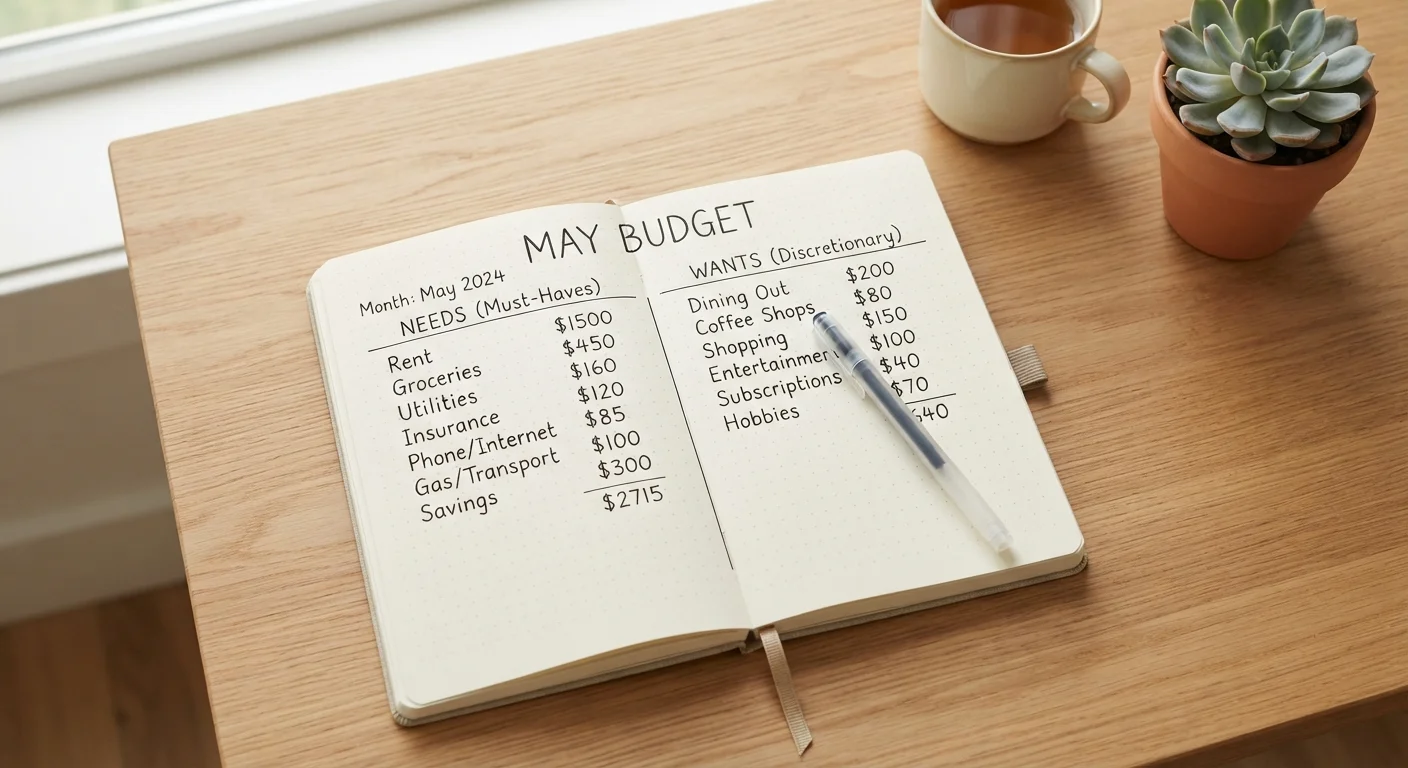
A "need" is something you must have to maintain basic health, safety, and the ability to earn income - think housing, utilities, food, and transportation to work. A "want" is anything beyond that baseline: something that improves comfort or enjoyment but isn't essential for survival or employment. The distinction forms the backbone of nearly every budgeting method.
In budgeting frameworks like the 50/30/20 rule, "needs" typically map to the 50% category, while "wants" fall under the 30% discretionary allocation - though personal circumstances always shape where individual expenses land.
Why This Distinction Matters Before Anything Else
Before you set a savings goal, choose a budgeting method, or even look at your bank statements, one question helps clarify everything: is this expense a need or a want? Getting comfortable answering that question - without shame or overthinking - is the foundation of practical money management.
If you're new to budgeting, this is the right place to start. Understanding what a budget actually is comes next; see our plain-language explanation of what budgeting really means if you haven't already. But the needs-vs-wants lens is what gives a budget its logic.
Context Changes the Category
A want in one person's life can be a genuine need in another's. Someone managing a chronic illness may need a gym or pool as part of a prescribed physical therapy plan. A freelancer may need a faster internet tier to deliver client work on time. These are real needs - not rationalizations. Categorize based on your actual circumstances, not a generic list.
What Counts as a Need
Needs are expenses that keep you housed, fed, healthy enough to function, and able to show up for work. A useful test: if you stopped paying for it, would your physical safety, shelter, or employment be at risk within a short period? If yes, it's almost certainly a need.
- Housing: rent or mortgage payments, renter's insurance
- Utilities: electricity, heat, water
- Basic groceries: food required for daily meals
- Transportation: a bus pass or car payments and fuel needed to get to work
- Essential healthcare: medications and required medical appointments
- Minimum debt payments: keeping accounts current to avoid penalty or legal action
Notice the word "basic" appears often. Needs cover function - not the premium version, the upgraded version, or the most convenient version of a thing.
~33%
Average share of income spent on housing in the US
According to the U.S. Bureau of Labor Statistics Consumer Expenditure Survey, housing consistently represents the largest single expense category for American households.
$300+
Average monthly subscription spend per US household
Research from C+R Research found many households underestimate their total subscription costs, often forgetting services they rarely use - a common example of want spending that goes unexamined.
What Counts as a Want
Wants are anything that adds enjoyment, comfort, or convenience beyond the functional baseline. They're not frivolous - they matter for quality of life - but they're also where budget flexibility lives.
- Streaming subscriptions and entertainment
- Dining out or ordering delivery
- Brand-name clothing beyond basic coverage
- Gym memberships and hobby supplies
- Upgrades: a larger apartment than needed, a newer car than required
Wants aren't bad. Removing all of them isn't the goal. The goal is to see them clearly so you're choosing to spend on them rather than spending by default.
For a fuller picture of where these expenses show up across a typical budget, our guide to spending categories people overlook walks through costs that often go unnoticed.
Label Without Judging Yourself
The point of sorting needs from wants isn't to feel guilty about enjoying life - it's to see your spending clearly. Everyone has wants; that's normal. Writing "W" next to a restaurant charge doesn't mean you were wrong to go. It just means you now have accurate information to work with when making future decisions.
The Gray Zone: When the Line Isn't Clear
Most budgeting anxiety comes from the middle - expenses that feel essential but technically aren't. A smartphone is a good example. The phone itself may be a need (staying reachable for work, accessing banking apps, handling emergencies). The latest model with maximum storage is a want layered on top of that need.
The same logic applies to food: groceries are a need; a weekly restaurant habit is a want. Both involve eating - but only one is required.
“The goal of budgeting isn't to eliminate wants - it's to make sure your needs are covered and that your wants are genuinely chosen rather than stumbled into by habit.”
— Personal Finance Editorial Team, Financial Education Writers
When categorizing gray-area expenses, ask: what is the minimum version of this that still meets the need? That minimum is the need. Everything above it is a want - and that's useful information, not a judgment.
Understanding how expenses shift month to month adds another layer of clarity. Our article on fixed vs. variable expenses pairs well with this framework.
Putting It Into Practice
You don't need a special app or spreadsheet to start. Take your last month of bank and credit card statements and write "N" or "W" next to each transaction. Don't overthink it - go with your first honest instinct. Patterns will emerge quickly.
Once you can see your spending in these two buckets, two things happen: you understand where your money actually goes, and you start to identify where small shifts could free up room for savings or debt payoff. The budgeting terms glossary can help if unfamiliar words come up during this process.
For readers focused on building savings habits, connecting this exercise to a broader savings plan makes the work meaningful. Explore practical approaches at our saving money hub.
This article is for general informational and educational purposes only and does not constitute personalized financial advice. For guidance specific to your financial situation, consider consulting a qualified financial professional.