

Key Takeaways
Sentimental Clutter
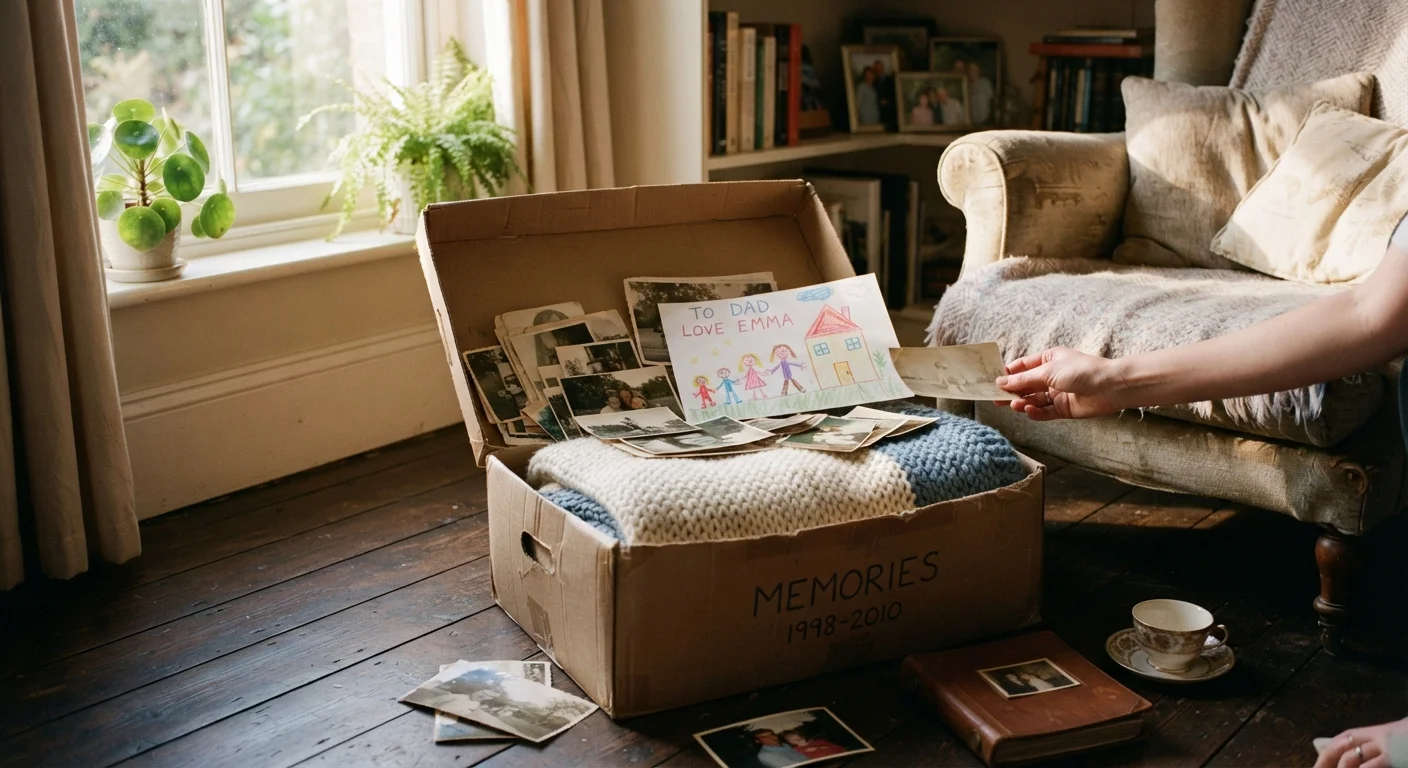
Sentimental clutter refers to objects you hold onto primarily because of the emotional memories or relationships they represent - not because they serve a practical purpose in your daily life. These items are often the hardest to part with during decluttering because letting go can feel like abandoning the memory itself. Understanding this distinction is the first step toward making more intentional choices about what stays in your home.
Psychologists sometimes refer to the emotional weight of objects as 'material symbolism' - the way physical things become proxies for identity, relationships, or periods of life.
Why Objects Carry Emotional Weight
Most decluttering advice focuses on the practical: sort by category, be ruthless, donate what you haven't used in a year. That approach works well for kitchen gadgets. It tends to fall apart the moment you open a box of birthday cards from your late grandmother or your child's first pair of shoes.
The reason is straightforward: humans are meaning-making creatures. We instinctively anchor memories and relationships to physical objects. A worn cardigan doesn't just represent warmth - it can represent a specific person, a sense of safety, or a version of yourself that no longer exists. Psychologists describe this as object attachment, and it's a deeply normal part of how we process experience and identity.
What makes sentimental items particularly difficult is that they often carry mixed emotions - love and grief, pride and loss, comfort and guilt. An item given by someone who has passed away, for instance, can feel like a stand-in for the relationship itself. Understanding why clutter creates stress can help you approach this with more self-compassion rather than frustration at your own hesitation.
This Is Not About Minimalism
Thoughtful decluttering doesn't require you to own fewer things as a lifestyle philosophy. The goal is to make intentional choices so that what you keep genuinely serves or enriches you - not to reach a target number of possessions. Some people keep a great many sentimental items and feel completely at peace with that. The aim is conscious choice, not a specific outcome.
The Three Most Common Emotional Traps
Knowing what's actually holding you back can make the process feel less mysterious. Most people cycle through one or more of these patterns:
- Guilt-keeping: Holding onto something because someone gave it to you, even if you've never liked it or used it. The item becomes an obligation rather than a joy.
- Identity anchoring: Keeping objects that represent who you used to be - a former career, a past relationship, an earlier phase of life - even when that identity no longer fits.
- Loss avoidance: Believing that releasing the object means losing the memory or disrespecting the person connected to it. This is arguably the most powerful trap because it feels morally weighted.
Recognising which pattern is at play doesn't instantly resolve the feeling, but it does give you something to work with. You can ask a more honest question: Am I keeping this because it genuinely enriches my life now, or because I'm afraid of what releasing it means?
Try a Timed, Low-Stakes Starting Point
If sentimental items feel too charged to begin with, start your first session with something adjacent but easier - greeting cards from acquaintances, duplicate photos, or decorative items with mild attachment. Building the decision-making muscle on lower-stakes choices makes it easier to approach more significant items later. Aim for 20-30 minute sessions rather than marathon efforts to avoid emotional exhaustion.
A Practical Framework for Sorting Sentimental Items
Rather than forcing a binary keep-or-toss decision, a three-category approach tends to work better for emotionally charged items:
- Keep actively: Items you interact with, display, or use - things that genuinely add to your daily life, not just your storage.
- Store intentionally: Items with high personal significance that you're not ready to release, placed in a clearly labelled box with a review date. This is different from indefinite hoarding - it's a conscious pause.
- Release thoughtfully: Items you're ready to let go, given to family members who want them, donated to relevant organisations, or in some cases, simply thanked and discarded.
One technique that many people find genuinely helpful: photograph the item before releasing it. A dedicated folder or printed photo book preserves the visual memory without requiring physical space. This step transforms letting go from an act of erasure into an act of curation.
For a broader approach to working through your home systematically, the room-by-room decluttering guide offers a low-pressure structure you can adapt to your pace.
80%
Of clutter is items never used
Professional organiser surveys commonly cite that roughly 80% of items people keep are rarely or never used, with sentimental categories among the hardest to evaluate.
3-6 months
Recommended pause before re-evaluating uncertain items
Organisation professionals frequently suggest a timed 'maybe box' approach - storing uncertain items and reviewing them after several months to gain emotional distance.
What to Do When You're Still Not Sure
Uncertainty is not a failure of resolve - it's useful information. If you've handled an item and still genuinely can't decide, put it in your 'store intentionally' category and set a calendar reminder to revisit it in three to six months. Time often clarifies what logic cannot.
It also helps to separate the memory from the object explicitly. Try saying, aloud or in writing, what the item represents to you - the relationship, the period of life, the feeling. Often, articulating this makes it clearer that the memory already lives within you, not within the cardboard and fabric. The object was always just a prompt.
If inherited items or grief-related objects feel genuinely overwhelming, that's worth honouring. Some people find it helpful to speak with a counsellor or therapist who can provide support that goes beyond home organisation. Decluttering doesn't have to be emotionally neutral, and you don't have to white-knuckle your way through it alone.
The habits and clarity you build through this process extend well beyond your home. Simple daily practices for mental clarity can complement the emotional work of creating a calmer, more intentional living space.