

| Most common cause of a running toilet | A worn or warped flapper |
| Average water wasted by a running toilet | Up to 200 gallons per day (U.S. Environmental Protection Agency (EPA)) |
| Typical cost of a replacement flapper | $3-$10 |
| Tools typically needed | Hands only or basic adjustable wrench |
| Time to diagnose common causes | 5-15 minutes |
Why a Running Toilet Deserves Your Attention
A toilet that runs constantly - making that faint hissing or trickling sound even when no one has flushed - can waste thousands of gallons of water per month. Beyond the environmental impact, it quietly inflates your water bill. The good news: most running toilets are caused by a handful of inexpensive, replaceable parts that a beginner can diagnose and often fix without calling a plumber.
Before reaching for a wrench, it helps to understand exactly what's happening inside that porcelain tank. Once you can name the parts and know what each one does, you'll instantly know where to look when something goes wrong.
| Most common cause of a running toilet | A worn or warped flapper |
| Average water wasted by a running toilet | Up to 200 gallons per day (U.S. Environmental Protection Agency (EPA)) |
| Typical cost of a replacement flapper | $3-$10 |
| Tools typically needed | Hands only or basic adjustable wrench |
| Time to diagnose common causes | 5-15 minutes |
Worth noting: many DIY home repairs are surrounded by myths that lead beginners astray. See our guide to common home repair myths for a clearer picture of what actually works.
The Key Parts Inside a Toilet Tank
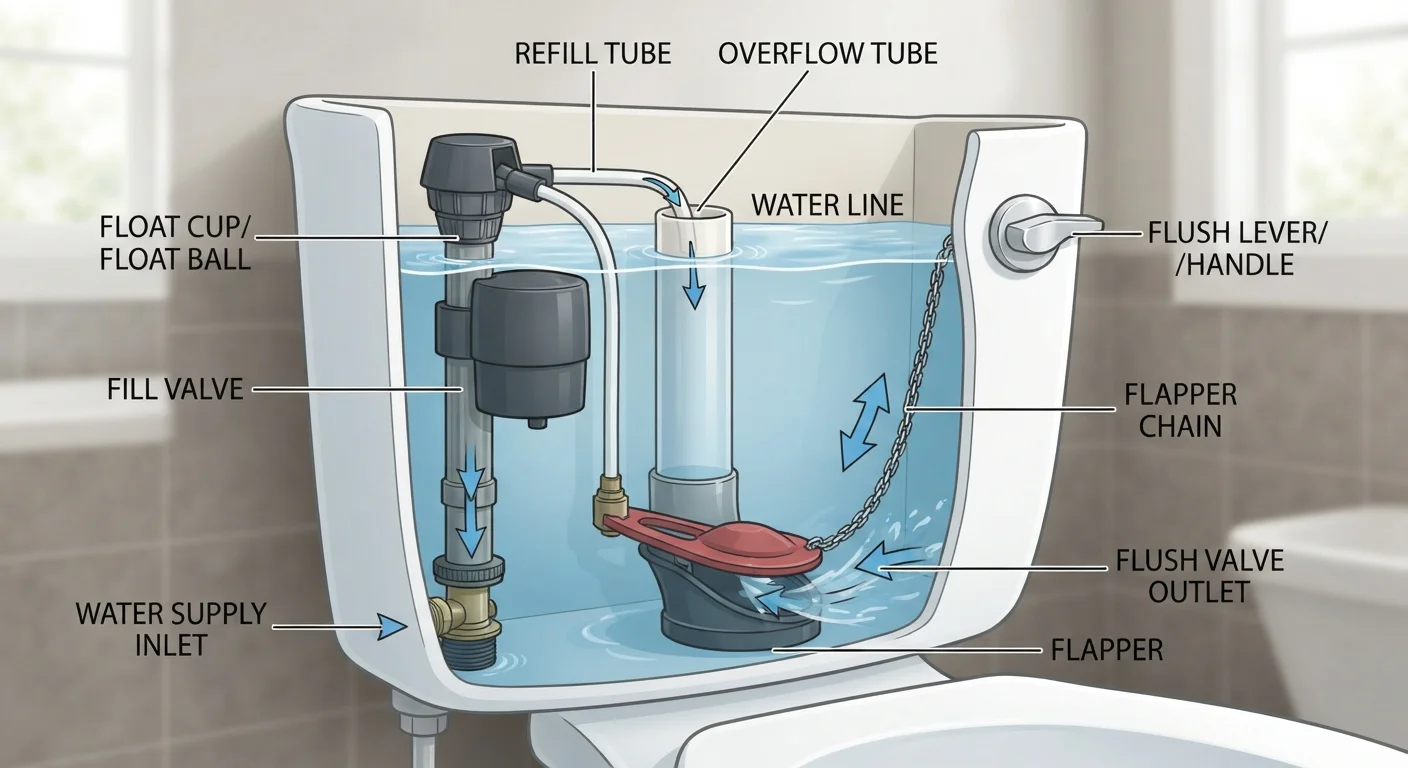
Lift the lid off your toilet tank and you'll see a small set of components working together in a surprisingly logical system. Here's what each one does:
The Fill Valve
Also called a ballcock on older toilets, the fill valve controls the flow of fresh water into the tank after a flush. When the water level drops during a flush, the fill valve opens; when the water rises back to the set level, it shuts off. A faulty fill valve that doesn't shut off completely is a leading cause of the hissing sound you hear from a running toilet.
The Float
The float tells the fill valve when to stop filling. On older toilets, this is a large ball attached to a horizontal arm. On modern designs, it's a cylindrical cup that rides up and down directly on the fill valve shaft. When the float sits too high, water rises above the overflow tube - causing a constant trickle. Adjusting or replacing the float is often a free fix.
The Overflow Tube
This vertical tube in the center of the tank acts as a safety drain. If the water level rises too high (because the float is set incorrectly or the fill valve fails), water flows down the overflow tube and into the bowl rather than spilling onto your floor. If you hear a constant trickle in the bowl but the tank looks full, water is likely running over the overflow tube.
The Flapper
The flapper is a rubber seal that sits over the drain hole at the bottom of the tank (called the flush valve seat). When you flush, it lifts to let water rush into the bowl. Afterward, it drops back down to seal the tank so it can refill. Flappers are the single most common cause of a running toilet - rubber degrades over time and a worn flapper lets water seep continuously into the bowl. You can confirm this by adding a few drops of food coloring to the tank; if color appears in the bowl without flushing, your flapper is leaking.
The Flush Valve
The flush valve is the opening - usually a 2- or 3-inch hole - at the bottom of the tank that the flapper seals. If the valve seat becomes corroded or coated with mineral deposits, even a new flapper won't seal properly. Light mineral buildup can sometimes be scrubbed away with a cloth or fine abrasive pad.
The Trip Lever and Chain
The trip lever is the arm connected to the flush handle. Pulling the handle lifts the lever, which tugs a chain attached to the flapper, lifting it. If the chain is too short, the flapper can't close fully; too long and it can get caught under the flapper, preventing a seal. Adjusting chain length (by moving the clip to a different link) is a 30-second fix.
Fill valve
The mechanism that refills the toilet tank with fresh water after a flush. It opens when water levels drop and shuts off once the correct level is reached.
Flapper
A rubber seal at the bottom of the tank that covers the flush valve opening. It lifts during a flush and drops back to seal the tank for refilling.
Float
A buoyant device connected to the fill valve that rises with the water level and signals the valve to stop filling when the correct height is reached.
Overflow tube
A vertical tube in the tank that diverts excess water into the bowl if the water level rises too high, preventing overflow onto the floor.
Flush valve seat
The rim of the opening at the tank's bottom that the flapper presses against to form a watertight seal.
Trip lever
The arm inside the tank connected to the flush handle. Pressing the handle moves this lever, which lifts the flapper via a chain.
Diagnosing and Fixing the Problem
Once you know the parts, diagnosing a running toilet becomes straightforward. Work through these checks in order:
- Check the chain length. It should have about half an inch of slack. Adjust the clip if needed.
- Check the float level. The water in the tank should sit roughly one inch below the top of the overflow tube. If not, adjust the float by bending the arm (older ballcock style) or turning the adjustment screw or pinching the clip on newer fill valves.
- Test the flapper. Use the food-coloring test described above. If it leaks, replace the flapper - they cost just a few dollars and clip or hook onto pegs on either side of the flush valve. Turn off the water supply at the valve behind the toilet, flush to empty the tank, swap the flapper, turn the water back on, and test.
- Check the fill valve. If the tank fills past the overflow tube even after float adjustment, the fill valve itself may need replacing. This is still a beginner-accessible repair, though it involves draining the tank fully and disconnecting the water supply line briefly.
If you've worked through these steps and the toilet still runs - or if you notice cracks, corrosion, or water on the floor around the base - it's time to contact a licensed plumber. Some problems go beyond part replacement and require professional assessment.
When to Call a Licensed Plumber
Toilet repairs involving water supply lines behind the wall, persistent leaks at the base, or tank cracks are not typical DIY tasks and may require permits or professional tools. In many areas, work that connects to the home's main plumbing supply must be performed - or at least inspected - by a licensed plumber. Always check your local codes before undertaking any repair beyond basic part replacement.