Key Takeaways
Fluid Balance from Food
Fluid balance refers to how your body maintains the right amount of water to function properly. While drinking fluids is essential, the foods you eat also contribute significantly to your daily water intake - some helping you stay hydrated, others working against it. Understanding this connection can make it easier to feel your best without obsessing over a water bottle.
Dietary water content is absorbed through the gastrointestinal tract alongside electrolytes like sodium and potassium, which regulate how water moves in and out of cells.
More Than a Water Bottle: The Role of Food in Hydration
Most of us think of hydration as a drinking problem - solved by carrying a water bottle and remembering to sip throughout the day. But research suggests that food accounts for roughly 20% of the average person's daily fluid intake. That means your meals are quietly doing hydration work every time you eat, whether you realize it or not.
The connection goes both ways. Some foods actively boost your fluid levels; others increase how much water your body needs to function. Learning which is which is one of the simplest, most beginner-friendly nutrition shifts you can make - no special diet required.
~20%
Daily fluid intake that comes from food
Health authorities including the U.S. National Academies of Sciences estimate that roughly 20% of daily water intake comes from food rather than beverages.
90%+
Water content in cucumber and watermelon
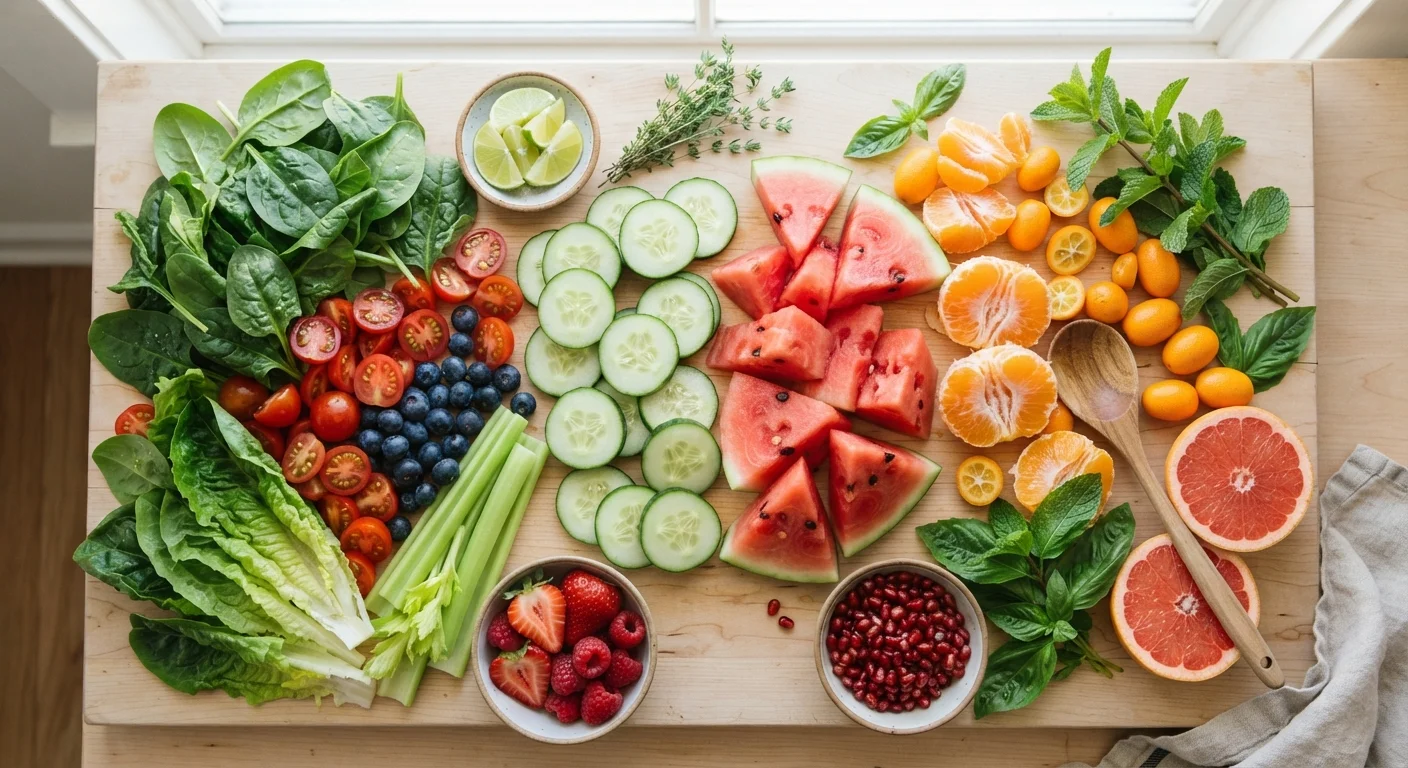
Many common fruits and vegetables exceed 90% water content by weight, making them some of the most effective dietary sources of hydration.
3,400 mg
Average daily sodium intake for U.S. adults
According to the CDC, the average American consumes significantly more sodium than the recommended 2,300 mg per day, largely through processed and restaurant foods.
Foods That Work With Your Hydration
Fruits and vegetables sit at the top of the hydration-friendly list. Many contain more than 90% water by weight, meaning that eating them delivers real fluid to your body alongside vitamins, minerals, and fiber. Cucumbers, celery, tomatoes, strawberries, and watermelon are standout examples - easy to add to meals or enjoy as snacks.
Beyond raw produce, foods like yogurt, soups, cooked oatmeal, and smoothies all carry meaningful water content. Leafy greens like spinach and romaine lettuce are particularly helpful because they also supply potassium and magnesium - electrolytes that help your body absorb and retain water at the cellular level.
Start With One Hydrating Food Per Meal
If changing your whole diet feels overwhelming, focus on adding just one water-rich food to each meal - a side salad, a piece of fruit, or a cup of broth-based soup. Small, consistent additions build habits without requiring a complete dietary overhaul. Over time, these choices naturally crowd out less hydrating options.
Electrolytes are minerals that carry a small electrical charge and regulate fluid movement in and out of your cells. Getting them from food - rather than relying solely on supplements or sports drinks - is the most straightforward approach for most people.
Foods That Work Against Your Fluid Balance
Ultra-processed foods, salty snacks, and fast food tend to be high in sodium, which shifts how your kidneys handle water. When sodium levels in the blood rise, the body responds by holding onto water to dilute it - which can actually increase thirst and leave cells less efficiently hydrated.
Alcohol is another notable disruptor. It suppresses a hormone called ADH (antidiuretic hormone) that tells your kidneys to conserve water, leading to increased urination and potential fluid loss. This is why alcohol-heavy occasions often leave people feeling drained the next day - not just tired, but genuinely low on fluids.
Putting It Together: Simple Eating Habits That Support Hydration
You don't need to overhaul your diet to improve your fluid balance. A few consistent habits make a noticeable difference:
- Fill half your plate with vegetables or fruit at most meals - this alone adds meaningful dietary water to your day.
- Choose whole foods over packaged snacks when possible, reducing your incidental sodium intake.
- Add a broth-based soup or a piece of fruit as a regular part of lunch or dinner.
- Notice your thirst cues - mild hunger mid-afternoon sometimes signals mild dehydration rather than a need for food.
None of these steps requires tracking, measuring, or following a rigid plan. They are small, practical shifts that build on each other over time. And if you find yourself curious about hydration signals in other contexts, it's worth noting that drinking habits can be informative for pets too - consistent monitoring of water intake is a useful habit across the board.
This article is for general informational and educational purposes only and is not a substitute for professional medical or nutritional advice. Please consult a qualified healthcare provider before making significant changes to your diet or if you have concerns about hydration-related health conditions.