

Key Takeaways
Why Meditation Myths Keep Beginners Away
Meditation has a reputation problem. For something backed by a growing body of research on stress reduction, focus, and emotional wellbeing, it's remarkably easy to talk yourself out of trying it. Most of the time, that reluctance traces back to a misconception - a picture in your head of what meditation is supposed to look like that feels impossible or irrelevant to your actual life.
The good news: almost every common belief that stops people from starting is simply incorrect. Whether you've convinced yourself you're "too anxious to meditate" or that you'd need an hour of silence you'll never find, the myths below are worth examining. For a deeper look at how meditation compares to related practices, check out our breakdown of mindfulness vs. meditation.
Myth
You have to completely empty your mind during meditation.
Fact
Meditation is not about stopping thoughts - it's about noticing them without getting swept away.
This is probably the most widespread misconception, and it stops countless beginners in their tracks. The moment a thought appears, they assume they've "failed." In reality, the moment you notice you've gotten distracted and gently bring your attention back is exactly what the practice trains. Thoughts arising is normal brain function - meditation builds your awareness of that process, not an ability to switch it off.
Myth
You need to meditate for at least 20-30 minutes for it to be worth anything.
Fact
Research suggests sessions as short as five to ten minutes can produce meaningful benefits when practiced consistently.
Studies published in journals including Mindfulness and Psychological Science have found improvements in attention, stress markers, and mood from relatively brief daily sessions. The key variable appears to be regularity, not duration. Starting with five minutes a day and building gradually is a far more sustainable approach than forcing a 30-minute sit you dread and eventually abandon.
Myth
Meditation is a religious practice, so it's not for everyone.
Fact
Secular meditation techniques have been studied and practiced independently of any religious tradition for decades.
While meditation does appear in Buddhist, Hindu, and other contemplative traditions, many widely researched forms - such as MBSR, developed by Dr. Jon Kabat-Zinn at the University of Massachusetts - are entirely secular. These programs were designed specifically for clinical and everyday use, with no religious framing. You can meditate as a practical mental wellness tool regardless of your beliefs or background.
Myth
If you're too anxious or restless, meditation won't work for you.
Fact
People who experience anxiety are often among those who benefit most - though they may need to start with shorter or movement-based practices.
It's counterintuitive, but feeling restless during meditation is not a sign it isn't working - it's often a sign your nervous system is learning to recognize and process agitation rather than act on it. For those who find sitting still especially difficult, walking meditation, body-scan exercises, or even slow, mindful breathing during a routine task can serve as accessible entry points. The goal is the same: building awareness, not achieving stillness.
Myth
Meditation produces immediate, dramatic results.
Fact
Benefits tend to accumulate gradually over weeks of consistent practice, not after a single session.
Meditation is a skill, much like learning an instrument or building physical fitness. A single session may leave you feeling calmer, but the structural benefits - reduced reactivity to stress, improved focus, better sleep quality - are generally observed in research after several weeks of regular practice. Expecting instant transformation is a setup for disappointment. Treating each session as practice, not performance, keeps expectations realistic and sustainable.
Myth
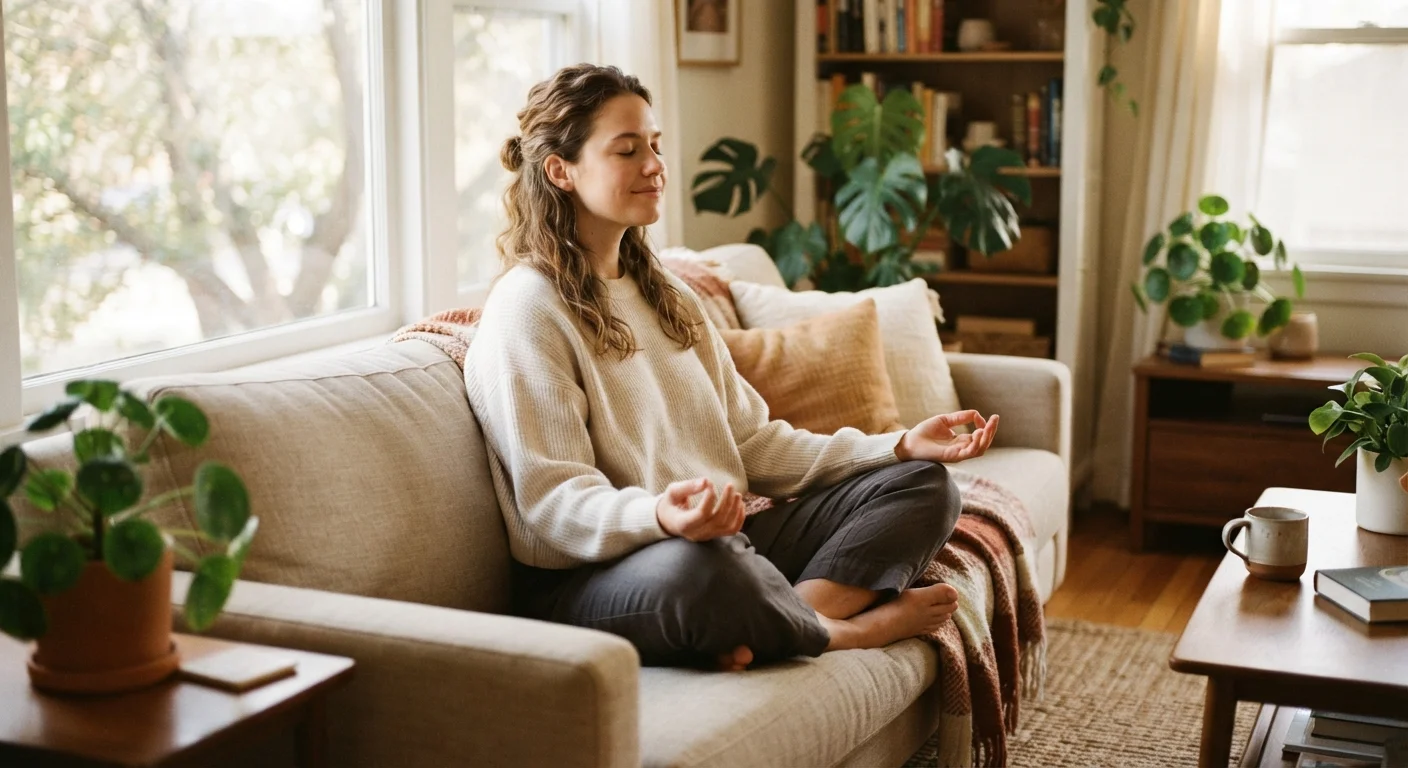
You have to sit cross-legged on the floor to meditate properly.
Fact
Posture matters only in that you should be alert and reasonably comfortable - the specific position is flexible.
You can meditate sitting in a chair, lying down (as long as you don't fall asleep), standing, or walking. The cross-legged floor pose is cultural imagery, not a requirement. What matters is that your posture supports a state of relaxed alertness - not so tense you're uncomfortable, not so reclined you drift off. Find what works for your body and your environment.
Starting Small and Staying Realistic
One pattern runs through nearly every meditation myth: the belief that more is required than actually is. More silence, more time, more discipline, more natural talent. Research and experienced practitioners consistently point in the opposite direction - small, consistent sessions build the habit far more reliably than ambitious attempts that fizzle out.
5-10 min
Daily practice linked to stress reduction
Multiple peer-reviewed studies have found measurable improvements in self-reported stress and attention after just five to ten minutes of daily meditation maintained over several weeks.
~8 weeks
Typical timeframe for noticeable habit benefits
Mindfulness-Based Stress Reduction (MBSR) programs, among the most researched secular approaches, are structured as eight-week courses, reflecting how long consistent practice typically takes to show reliable effects.
If you've ever felt stuck trying to build a new habit, you may find the same obstacle appears in other areas of life. Our piece on mindfulness as a daily practice walks through how to anchor new habits to your existing routine - the same principle applies here.
Meditation Is Not a Mental Health Treatment
Meditation can be a helpful wellness practice for many people, but it is not a clinical treatment for anxiety disorders, depression, trauma, or other mental health conditions. If you are struggling with your mental health, please reach out to a licensed therapist or healthcare provider. Meditation may complement professional care - it is not a replacement for it.
This article is for general informational purposes only and is not a substitute for professional mental health advice. If you are experiencing significant anxiety, depression, or other mental health concerns, please consult a qualified healthcare professional.