

Key Takeaways
You Don't Need a Gym to Move Well
The idea that physical health requires expensive equipment, a gym membership, or hours of free time is one of the most common barriers people face when starting out. The good news: it simply isn't true. Some of the most evidence-supported daily habits for physical wellness require nothing more than your body, a little floor space, and a few minutes of intention.
Whether you're working with a small apartment, a busy schedule, or just not sure where to begin, the habits below are designed to meet you exactly where you are. They're scalable, low-risk, and built for real life - not an idealized fitness routine. For a framework on turning any of these into a lasting daily practice, our end-to-end habit guide is a helpful companion resource.
Pair New Habits With Existing Ones
One of the most reliable habit-building strategies is 'habit stacking' - attaching a new behavior to something you already do automatically. Try doing calf raises while brushing your teeth, or a two-minute mobility flow right after waking up. Small pairings like these remove the need for willpower and make consistency much more achievable. For a deeper dive, see our step-by-step habit guide.
Six Habits Worth Starting This Week
Daily Walking
Walking is one of the most well-researched forms of physical activity available to people of all ages and fitness levels. Research consistently links regular walking to improved cardiovascular health, better mood, lower blood sugar, and reduced risk of chronic disease. You don't need a trail or a treadmill - a neighborhood sidewalk, a parking lot loop, or even a hallway works fine.
Start with what's realistic: a 10-minute walk after a meal is a genuinely useful beginning. You can build from there at your own pace. Keeping comfortable shoes by the door is a simple environmental cue that makes it easier to follow through.
A 10-minute walk after a meal is a genuinely useful - and research-supported - beginning.
Bodyweight Strength Movements
Exercises like squats, lunges, push-ups, and glute bridges use your own body as resistance, making them completely free and endlessly scalable. Strength training of any kind supports muscle mass, bone density, and metabolic health - all of which tend to decline with age if we don't actively maintain them.
The key for beginners is form over volume. A few slow, controlled repetitions with good alignment are far more valuable than rushing through a large set. Many people find success by pairing these movements with an existing routine, such as squats while waiting for the coffee to brew.
A few slow, controlled reps with good alignment are more valuable than rushing through a large set.
Mobility and Flexibility Work
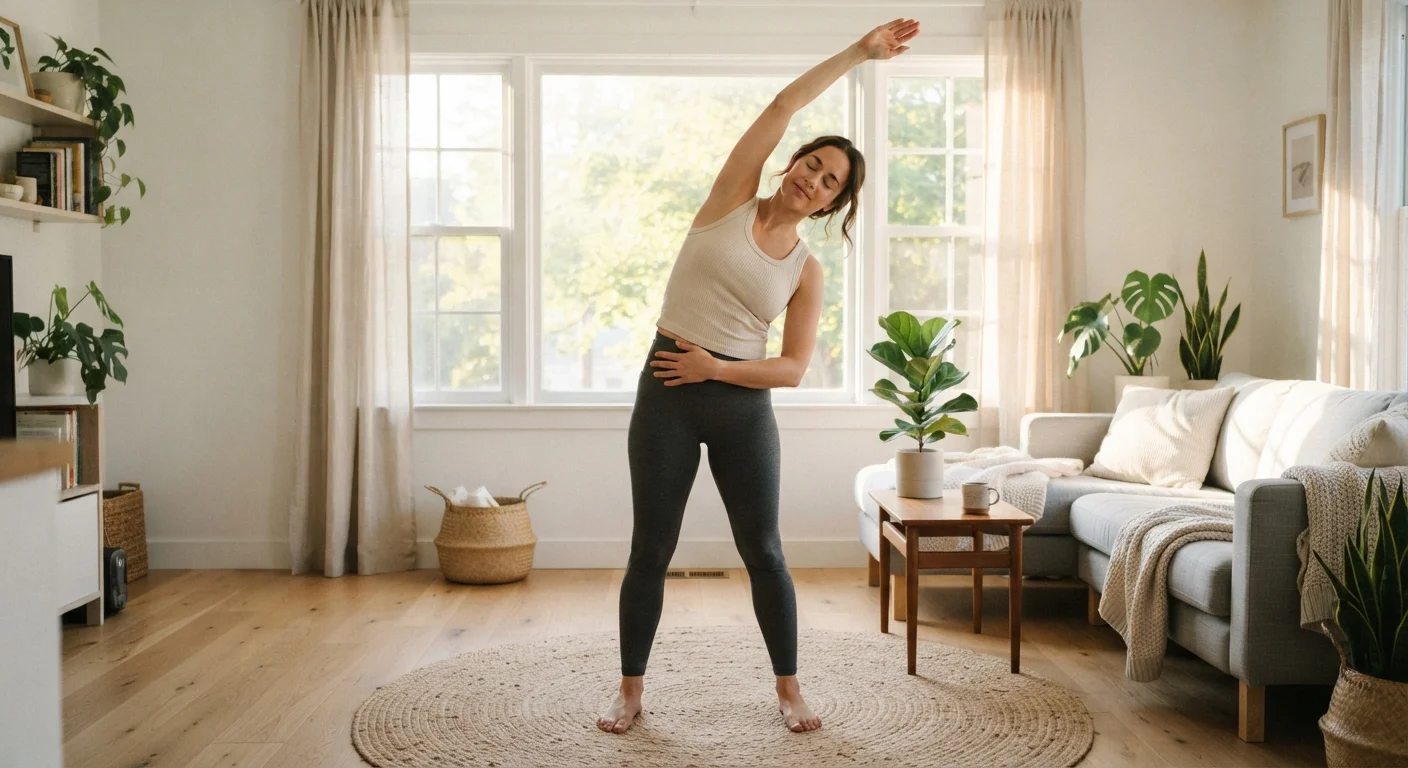
Mobility work - gentle movement through a joint's full range of motion - is often overlooked but makes a big difference in how your body feels day to day. Hip circles, shoulder rolls, spinal rotations, and seated hamstring stretches all qualify, and none require any props.
Spending even five to ten minutes on mobility each morning can reduce stiffness, improve posture, and make other physical tasks feel easier. Think of it less as a workout and more as daily maintenance for your joints. This is especially valuable for anyone who spends long hours seated.
Mobility work is daily maintenance for your joints - and it takes less than ten minutes.
Intentional Breathing Exercises
Controlled breathing - sometimes called breathwork - bridges the gap between physical and mental health. Techniques like diaphragmatic breathing (breathing deeply into your belly rather than your chest) activate the body's parasympathetic nervous system, which helps reduce the physical effects of stress on the body.
Even a few minutes of slow, deliberate breathing can lower heart rate and ease muscle tension. Box breathing (inhale for four counts, hold for four, exhale for four, hold for four) is a simple, well-known starting point. No equipment, no space requirements, and it can be done anywhere.
A few minutes of slow, deliberate breathing can lower heart rate and ease physical muscle tension.
Consistent Sleep Positioning and Wind-Down Routine
Physical health isn't limited to movement. Sleep quality profoundly affects muscle recovery, immune function, hormonal balance, and energy levels. While you can't force sleep, you can build a consistent wind-down habit that signals to your body that rest is coming.
Gentle stretching, dimming lights, and stepping away from screens in the final 30-60 minutes before bed are all zero-equipment strategies that many sleep researchers recommend as part of general sleep hygiene education. A regular sleep and wake time - even on weekends - helps regulate your body's internal clock over time.
A consistent wind-down routine signals your body that rest is coming - no equipment needed.
Balance Training
Standing on one foot while brushing your teeth. Walking heel-to-toe in a straight line across the kitchen. Pausing in a single-leg stance while waiting for the microwave. These micro-moments of balance practice are genuinely useful for building stability and proprioception - your body's sense of its own position in space.
Balance tends to decline with age and inactivity, and poor balance is a leading contributor to falls. Weaving small balance challenges into routine moments of the day is a beginner-friendly way to address this proactively, without any dedicated training block.
Micro-moments of balance practice - like standing on one foot - add up to real stability gains.
This Is General Information, Not Medical Advice
The habits described in this article are general wellness education intended for healthy adults. Everyone's physical condition is different. If you have an existing health condition, injury, or mobility limitation, please consult a qualified healthcare professional before beginning any new physical activity routine. They can help you adapt or modify movements to suit your specific needs safely.
Small Moves, Real Results
None of these habits are dramatic. That's intentional. Research on behavior change consistently shows that small, sustainable actions practiced consistently outperform intense routines that get abandoned after a few weeks. The goal isn't perfection - it's showing up regularly enough that the habit becomes automatic.
If you're looking to build on what's here, tiny habits that compound over time explores how micro-actions add up in meaningful ways. And if you want a structured first week to work through, your first week of building a daily routine walks you through it day by day. Physical health doesn't require a transformation - just a direction.
This article is for general informational and educational purposes only and is not a substitute for professional medical advice, diagnosis, or treatment. Always consult a qualified healthcare provider before starting any new exercise program, especially if you have a health condition or injury.